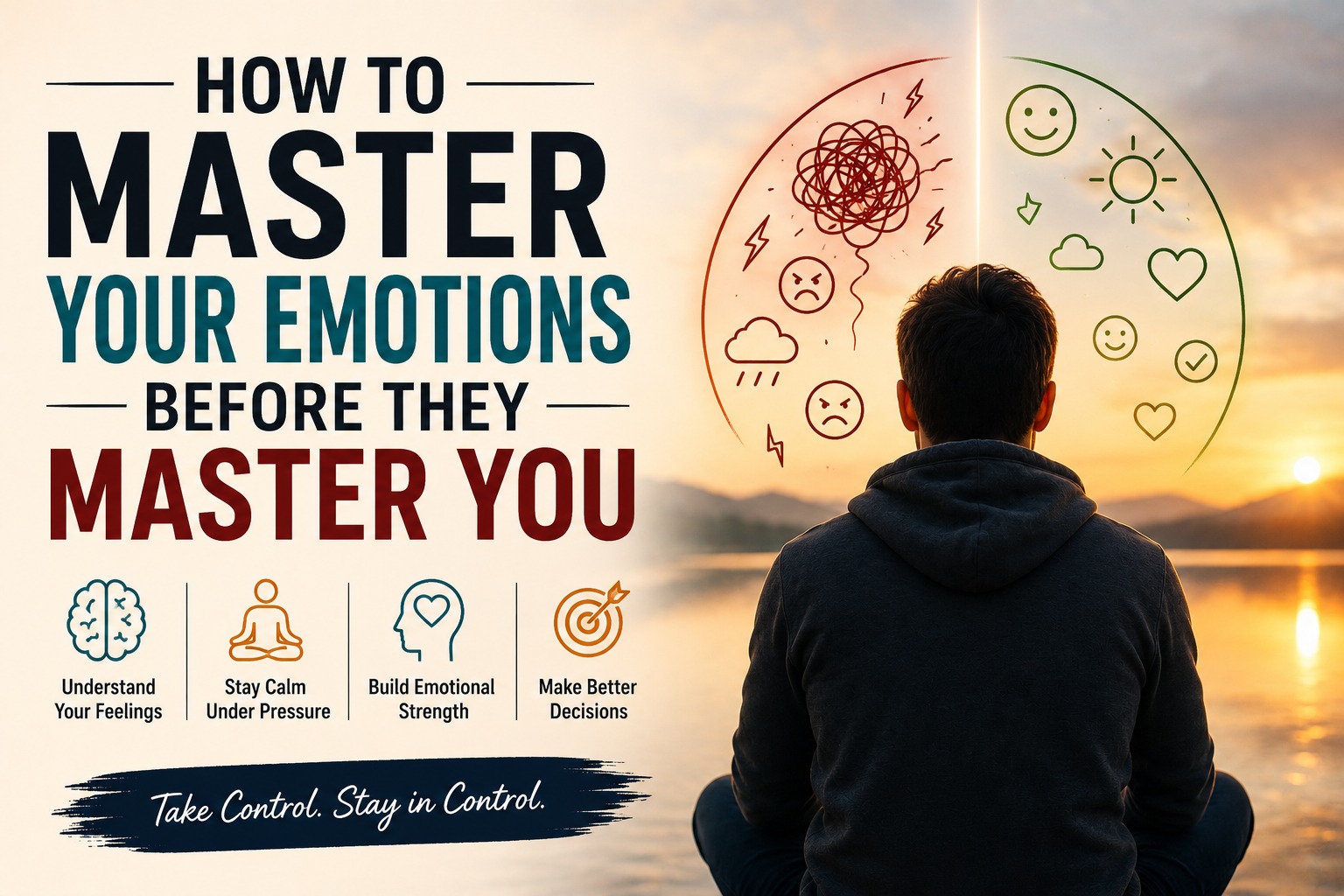
If you want to learn how to master your emotions, you first need to understand that feelings aren’t the enemy Have you ever said something in anger.. And regretted it five minutes later? Or maybe you bought something expensive just because you were stressed. Later, you looked at your bank account and wondered, “Why did I do that?” We’ve all been there. Most people think emotions are the problem. They’re not. The real problem is reacting before thinking. Imagine driving a car. Suddenly, someone cuts in front of you. Your heart starts racing. Your hands grip the steering wheel. For a second, you feel like chasing them or shouting through the window. But then you stop yourself.
A few minutes later, you don’t even remember that driver. That tiny pause saved you from making a bad decision. Life works the same way. Many of our biggest mistakes don’t happen because we’re bad people. They happen because we react too quickly. That’s why learning to manage your emotions isn’t just good for your mental health. It helps your relationships. Your career. Your finances. And even your confidence.
Emotions Aren’t the Enemy
People often say, “Don’t be emotional.” But that’s impossible. You’re human. You’ll always feel happiness. Sadness. Fear. Excitement. Disappointment. The goal isn’t to remove emotions. The goal is to stop letting them control every decision. Think about a smoke alarm. It’s useful. It tells you when something might be wrong. But imagine if it went off every time you made toast. Eventually, you’d stop trusting it. Your emotions work in a similar way. They send signals. Not instructions. You don’t have to obey every feeling that shows up.
Why Your Brain Reacts So Fast
Here’s something interesting. Your brain likes speed. Thousands of years ago, reacting quickly helped humans survive. If someone heard a strange sound in the forest, they didn’t stop to analyze it. They ran. That quick reaction protected them. Today, most dangers aren’t wild animals. They’re emails. Arguments. Deadlines. Social media comments. But your brain still reacts as if every situation is an emergency. That’s why one negative message can ruin your mood for hours. Even when it shouldn’t.but your brain still reacts as if every situation is an emergency.
That’s why one negative message can ruin your mood for hours. Even when it shouldn’t. According to psychological research on emotional regulation published by Harvard Health, learning to create a gap between a stimulus and your reaction is key to retraining your brain’s threat response.”
The Five-Minute Rule That Saves Relationships
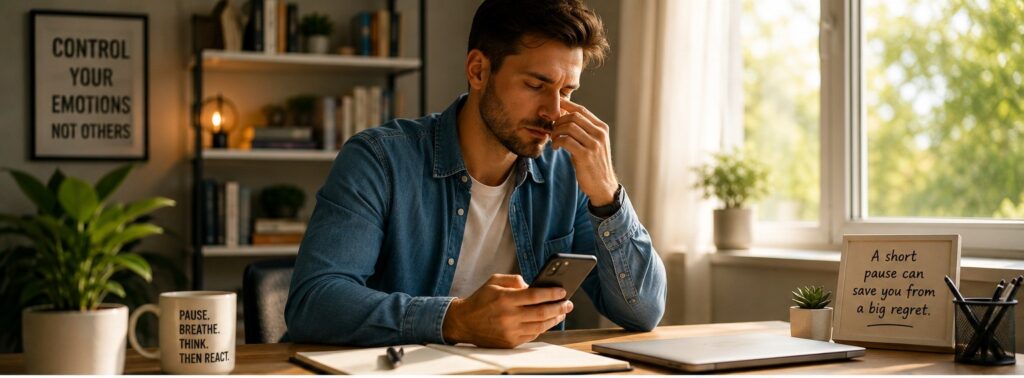
One friend told me something I’ll never forget. Whenever he gets really angry, he refuses to reply immediately. Not because he’s weak. Because he knows angry messages usually create bigger problems. Instead, he waits five minutes. Sometimes ten. By the time he comes back, half the anger has disappeared. The message he almost sent suddenly feels unnecessary. It’s amazing how often time changes our perspective. Not every emotion deserves an instant response. Sometimes the smartest reply is simply waiting. If you want to know how this same technique can help you stop putting off important tasks, read our guide on The 5-Minute Rule: How to Beat Procrastination.”
You Don’t Need to Win Every Argument
This lesson takes time to understand. Imagine arguing with someone online. You write a long reply. They answer back. Now you feel like proving your point. An hour disappears. Your mood gets worse. Nothing changes. Nobody wins. Some battles cost more than they’re worth. Protecting your peace is often more valuable than proving you’re right. Not every opinion deserves your energy. Sometimes walking away is the strongest move you can make.
Stress Often Pretends to Be Hunger
Have you noticed this? A difficult day at work. A bad meeting. An argument. Suddenly you’re standing in front of the fridge. You’re not actually hungry. You’re looking for comfort. Many people confuse emotional hunger with physical hunger. The same thing happens with online shopping. Some people don’t buy things because they need them. They buy them because they’re stressed. Learning to notice these patterns is the first step toward changing them. This is very similar to how we make bad financial choices when we are stressed. To fix your money habits, check out The 50/30/20 Budget Rule Explained for Beginners.”
Your Feelings Are Real… But They Aren’t Always True
This is one of the hardest things to accept. Just because you feel something doesn’t automatically make it a fact. Imagine sending a job application. Two days pass. No reply. Your mind immediately starts creating stories. “They probably rejected me.” “I’m not good enough.” “Someone else got the job.” Then, three days later… You receive an interview invitation. Nothing changed except your assumptions. Our emotions often fill empty spaces with negative stories. That’s why it’s important to pause before believing every thought that appears in your mind.
Learn to Name What You’re Feeling
This sounds simple. But most people never do it. Instead of saying, “I’m having a bad day.” Try asking yourself, “What exactly am I feeling?” Are you angry? Embarrassed? Lonely? Overwhelmed? Disappointed? The more specific you become, the easier it becomes to handle the emotion. Think about going to a doctor. Saying, “I don’t feel good.” is much harder to treat than saying “My head hurts.” Your emotions work the same way. Clarity often reduces emotional chaos.When you start naming your feelings, you take the first real step in learning how to master your emotions effectively.”
Stop Borrowing Other People’s Emotions
Have you ever opened social media feeling perfectly fine.. And closed the app feeling anxious? Nothing in your own life changed. But suddenly you felt behind. Someone bought a new house. Someone got promoted. Someone posted vacation photos. Your mood changed because you borrowed someone else’s emotional world. Social media isn’t real life. It’s a collection of carefully chosen moments. The happiest-looking person online may also be having the hardest week of their life. That’s why protecting your emotional energy sometimes means closing the app and returning to your own life.
You Don’t Have to Solve Everything Today
When emotions become overwhelming, many people think they must fix everything immediately. That’s rarely true. Imagine your room is completely messy. Looking at the whole room feels stressful. But picking up just one shirt feels easy. Life is similar. You don’t always need to solve your entire future before going to sleep. Sometimes today’s job is simply taking the next small step. That step creates enough momentum for tomorrow.
Emotional Control Is a Daily Skill
“Many people wonder how to master your emotions during high-stress moments, and they often believe emotionally strong individuals never get upset. That’s not true. They still feel stress. They still feel fear. They still feel disappointment. The difference is what happens next. Instead of reacting immediately… They pause. They think. Then they respond. That small gap between emotion and action changes everything. And like any other skill, it gets stronger with practice.

Final Thoughts on How to Master Your Emotions
You don’t become emotionally stronger overnight. No book. No podcast. No motivational video can do that for you. Real emotional strength grows through small daily choices. Taking a deep breath before replying. Walking away from an unnecessary argument. Sleeping before making a big decision. Putting your phone down when social media starts affecting your mood. These moments may seem small. But over time, they completely change the way you handle life. Your emotions will always be part of you. They don’t need to disappear. They just don’t need to be in charge. The next time you feel yourself reacting too quickly… Pause. Give yourself a moment. That one small pause might save you from a decision you’ll regret later.
Frequently Asked Questions
How can I control my emotions during stressful situations?
Start by slowing down your response instead of reacting immediately. Taking a few deep breaths or waiting a few minutes before responding can help you think more clearly.
Is it bad to feel emotional?
Not at all. Emotions are a normal part of being human. The goal isn’t to stop feeling emotions but to avoid letting them control your decisions.
Why do I react so quickly when I’m angry?
Your brain is designed to react fast when it senses a threat. Learning to pause before responding helps your logical thinking catch up with your emotions.
Can emotional control be improved?
Yes. Like any skill, emotional control becomes stronger with regular practice. Small habits, such as pausing before reacting and becoming aware of your feelings, make a big difference over time.
If this article helped you, remember one simple idea: