Money Habits can have a bigger impact on your financial future than most people realize. A few years ago, I knew two friends who earned almost the same amount of money. Both had similar jobs. Both lived in the same city. Both got salary hikes every year. But five years later, their lives looked completely different. One had savings, investments, and peace of mind. The other was still living paycheck to paycheck. At first, it didn’t make sense. How could two people earning almost the same income end up in such different situations?
The answer wasn’t hidden in their salary. It was hidden in their habits. Most people think staying poor is only about not earning enough money. Income matters, of course. But income isn’t the whole story. There are people who earn a lot and still struggle financially. And there are people with average incomes who slowly build wealth over time. The difference often comes down to daily decisions. Tiny choices. Small habits. Things that don’t seem important today. But become very important after a few years. Let’s talk about some of those habits. You may recognize a few of them in your own life. And that’s okay. The goal isn’t to feel guilty. The goal is to become aware.
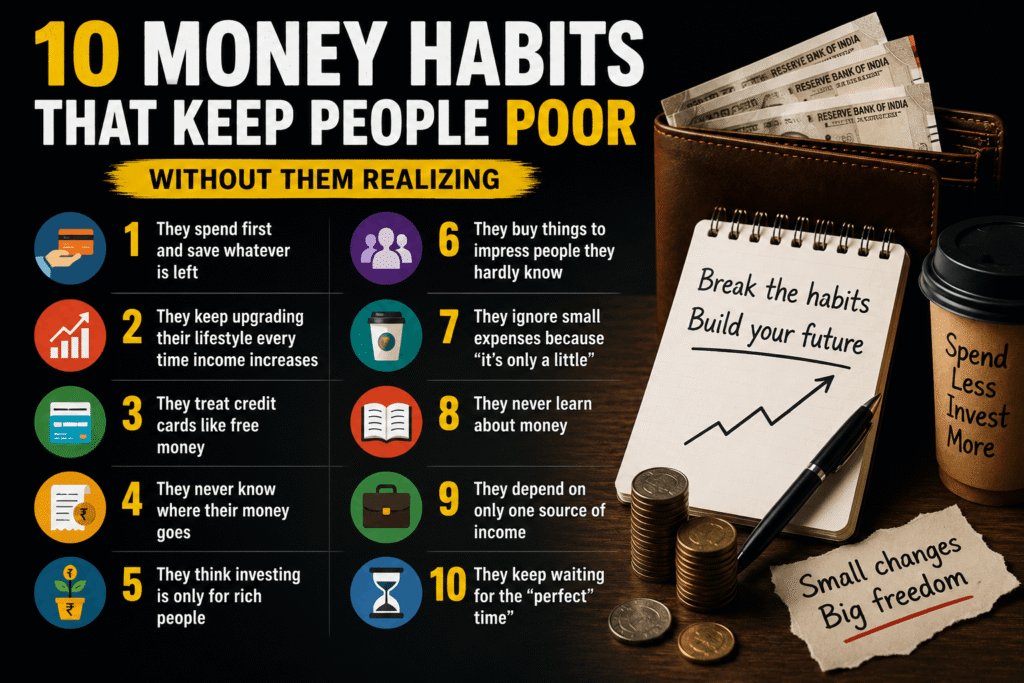
They Spend First and Save Whatever Is Left
These money habits may look small today, but they can have a huge impact on your finances over time. For many people, payday feels like a celebration. The salary arrives. A few online orders are placed. Food delivery becomes more frequent. Some money goes toward entertainment. Then the month moves on. Bills appear. Unexpected expenses show up. And at the end of the month, almost nothing is left. The problem isn’t that these people never save. The problem is that saving happens last. Imagine trying to fill a water bottle after pouring water into ten different glasses. There may not be much left.
Money works the same way. People who build financial security usually reverse the order. They save first. Then they spend what remains. Even a small amount matters. Because consistency matters more than size in the beginning. If you don’t know how to split your income correctly, a great place to start is The 50/30/20 Budget Rule Explained for Beginners, which gives you a simple structure to manage your money without stress.”
They Keep Upgrading Their Lifestyle Every Time Income Increases
This one is surprisingly common. Someone gets a raise. A few weeks later, their expenses also increase. A better phone. More subscriptions. More expensive restaurants. A bigger EMI. A new lifestyle. On paper, they’re earning more. But their financial situation hasn’t really improved. In some cases, it becomes worse. Have you ever noticed how quickly people get used to things?
The excitement of a new purchase often fades faster than expected. Then another purchase feels necessary. And another. This cycle quietly keeps many people stuck. More income should improve your future. Not just your monthly spending. . This is why more people in the US are now turning toward trends like Loud Budgeting to comfortably say no to unnecessary spending without feeling any social awkwardness.”
They Treat Credit Cards Like Free Money
Credit cards are useful tools. The problem starts when people forget that borrowed money still belongs to someone else. A small purchase feels harmless. Then another one. Then a bigger one. After a while, the monthly bill arrives. Suddenly the situation feels very different. Many people don’t realize how dangerous this habit becomes because the pain is delayed. When you pay with cash, you immediately feel the cost. With credit, the bill shows up later. That delay often encourages spending that wouldn’t happen otherwise. The issue isn’t the card itself. The issue is losing track of reality.
They Never Know Where Their Money Goes
Ask someone how much they spent last month on food deliveries, online shopping, and subscriptions. Many won’t know. Not because they’re careless. Because they’ve never checked. Money has a strange habit. It disappears faster when nobody pays attention to it. A $199 subscription here. A $299 subscription there. A few impulse purchases. A couple of food orders. Individually, they don’t look serious. Together, they can quietly consume a large portion of your income. You don’t need complicated spreadsheets. You don’t need advanced financial software. Even tracking your spending for one month can reveal things you never noticed before. And once you see the pattern, it’s much easier to change it.
They Think Investing Is Only for Rich People
This belief has probably delayed more wealth-building than almost anything else. Many people tell themselves they’ll start investing after they earn more money. The problem is that “later” keeps moving further away. A person earning ₹20,000 says they’ll invest when they earn $40,000. Then they reach $40,000 and say they’ll start at $60,000. The cycle continues. Meanwhile, time keeps passing. And time is one of the biggest advantages an investor can have. You don’t need to be rich to start investing. In many cases, investing is one of the things that helps people become financially stronger over time. Waiting forever rarely helps.
At this point, you might be noticing something interesting.
None of these habits involve dramatic mistakes. Nobody is burning money. Nobody is making crazy decisions. That’s exactly why they’re dangerous. They look normal. They feel normal. And because they feel normal, people keep repeating them for years without questioning them.
They Buy Things to Impress People They Hardly Know
Let’s be honest. We’ve all done this at least once. You see someone using the latest phone. Suddenly your current phone feels old. You notice a friend buying expensive shoes. Now yours don’t seem good enough. Sometimes we don’t buy things because we need them. We buy them because we don’t want to feel left behind. The funny part? Most people are too busy thinking about their own lives to judge yours. A $70,000 phone won’t change your future. But saving or investing that money might. Before buying something expensive, ask yourself one simple question. “Would I still buy this if nobody else ever saw it?” That one question can save you a lot of money.
They Ignore Small Expenses Because “It’s Only a Little”
Changing your money habits doesn’t require a high income. It requires consistent decisions. People usually worry about big expenses. Rent. Car payments. School fees. But small expenses quietly do more damage than most people realize. A coffee here. An online game purchase there. Food delivery after work. Another subscription you forgot to cancel. None of these feel expensive. But together, they slowly empty your wallet. Think of a bucket with tiny holes. Each hole leaks only a little water. But after a while, the bucket is almost empty. Money works the same way. You don’t have to stop enjoying life. You just need to know where your money is quietly disappearing.
They Never Learn About Money
Most schools teach mathematics. Science. History. Geography. But very few teach personal finance. That’s why many adults know how to solve equations but don’t know how interest works. Or budgeting. Or investing. The good news? Learning about money has never been easier. You don’t need an expensive course. You don’t need a finance degree. One good book. One useful podcast. A few trusted articles every week. That’s enough to slowly improve your financial knowledge. The more you understand money, The Psychology of Money and how your mindset shapes your wealth, the better decisions you naturally make.
They Depend on Only One Source of Income
Imagine your phone has only one way to charge. If that charger stops working, you’re stuck. Income works in a similar way. If all your money comes from one salary, losing that job becomes much more stressful. That’s why many people slowly build additional income over time. Some start freelancing. Some sell products online. Some invest. Some create digital content. You don’t need five income sources tomorrow. Even building one extra source over the next year can make a huge difference. Financial security often grows step by step. Not overnight.
They Keep Waiting for the “Perfect Time”
This habit quietly delays financial progress for years. “I’ll start saving after my next salary.” “I’ll invest next year.” “I’ll learn about money when life becomes less busy.” The perfect time almost never arrives. Life always finds a way to stay busy. That’s why people who make progress usually start before they feel completely ready. Not with huge amounts. Not with perfect knowledge. Just with the next small step. Progress loves action. Waiting usually changes nothing.
The Biggest Lesson Isn’t About Earning More
Many people believe becoming financially secure is only about earning a bigger salary. A higher income definitely helps. But it doesn’t automatically solve poor money habits. If someone spends everything they earn today, they’ll probably spend everything they earn after their next promotion too. Real financial change usually begins with awareness. Knowing where your money goes. Understanding your habits. Making slightly better decisions every month. Those small improvements may not feel exciting today. But after five or ten years, they can completely change your financial life.

Final Thoughts
If you recognized yourself in some of these habits, don’t feel discouraged. Almost everyone makes money mistakes. The important thing is noticing them before they become permanent. Don’t try to fix all ten habits this week. Pick one. Maybe start tracking your spending. Or save a small amount the moment your salary arrives. Or spend thirty minutes learning something new about personal finance. Small actions repeated consistently are far more powerful than big plans that never begin. Money habits don’t change overnight. But they do change. And once they do, your future starts changing with them.
If you’re serious about improving your financial knowledge, it’s also worth reading trusted resources like the Consumer Financial Protection Bureau or Investopedia to learn more about budgeting, saving, and investing.
Frequently Asked Questions
Why do people stay poor even when they earn a good salary?
Many people struggle financially because of spending habits, lifestyle inflation, debt, and a lack of financial planning. Income matters, but habits often matter even more.
Is saving more important than earning more?
Both are important. However, increasing your income without improving your money habits often doesn’t lead to long-term financial security.
What’s the first money habit I should change?
Start by tracking where your money goes every month. Once you know your spending patterns, it’s much easier to make better financial decisions.
Can small savings really make a difference?
Yes. Small amounts saved consistently over months and years can grow into significant financial security, especially when combined with smart investing.
Why are money habits important?
Money habits influence how you earn, spend, save, and invest. Better money habits can lead to long-term financial stability.
If this article helped you see your money habits differently, share it with someone who wants to build a better financial future. Sometimes one small habit change today can create a completely different life tomorrow.
Related Articles:
The Psychology of Money: 7 Mindset Shifts That Build Wealth
The 50/30/20 Budget Rule Explained for Beginners (A Simple Guide to Managing Money Without Stress)
Loud Budgeting: Why Saying “No” to Spending Is the New Status Symbol
The 5-Minute Rule: How to Beat Procrastination and Start Anywhere