
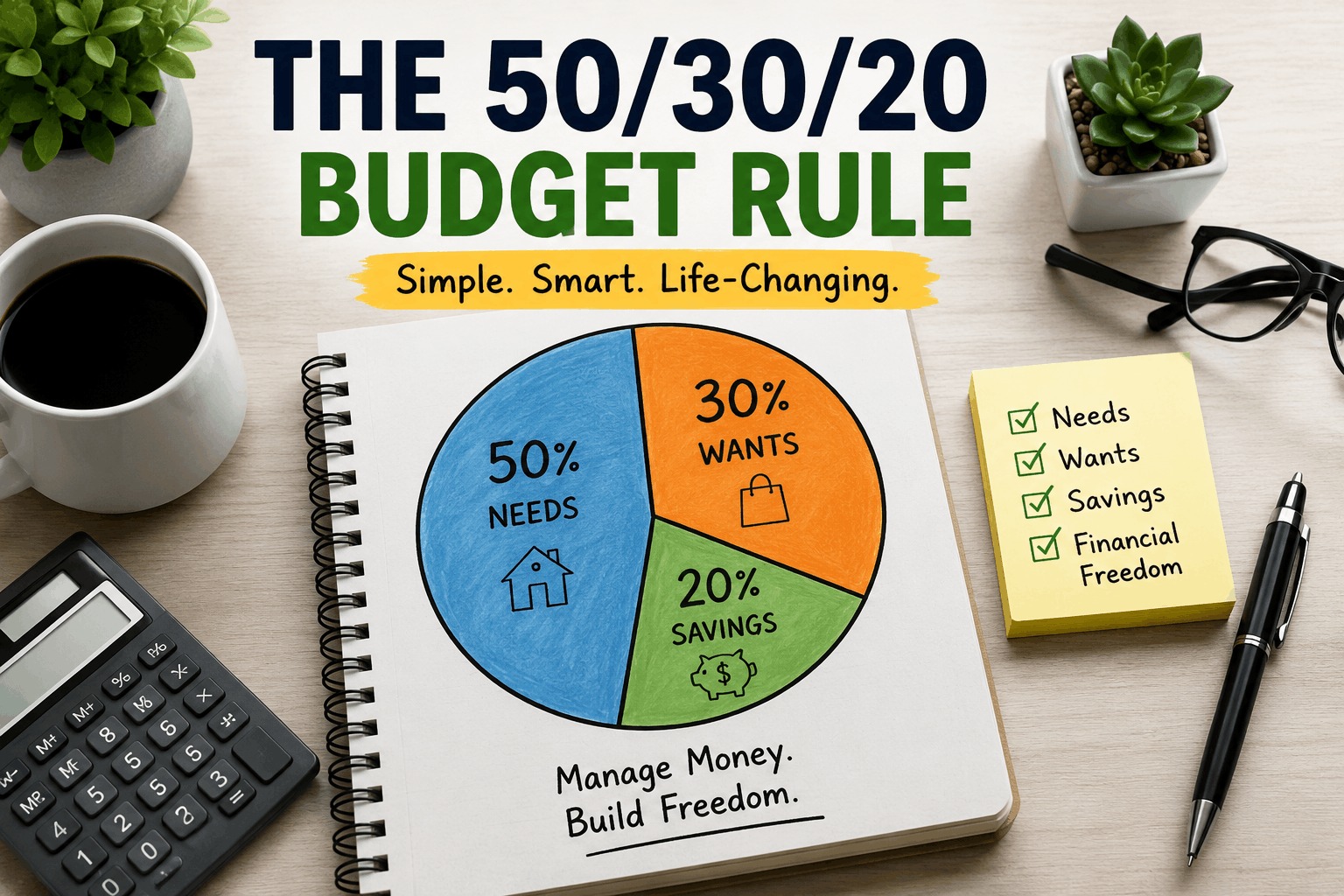
The 50/30/20 Budget Rule is one of the easiest budgeting methods for beginners. Let’s be honest. Have you ever wondered… “Where did all my money go?” You got paid a few days ago. Everything looked fine. Then suddenly… Your bank balance looked scary. No big purchase. No luxury shopping. Yet… The money disappeared. If this sounds familiar, don’t worry. You’re not bad with money. You just don’t have a simple system. That’s exactly why millions of people use the 50/30/20 Budget Rule. It’s one of the easiest budgeting methods in the world. No complicated spreadsheets. No confusing calculations. Just three simple numbers. Let’s break it down.
What Is the 50/30/20 Budget Rule?
The 50/30/20 Rule is a simple way to divide your income into three categories. Imagine your monthly income is one big pizza. Now cut that pizza into three parts.
🍕 50% for Needs
🍕 30% for Wants
🍕 20% for Savings and Investments
That’s it. Simple.
Easy to remember.
And surprisingly effective.
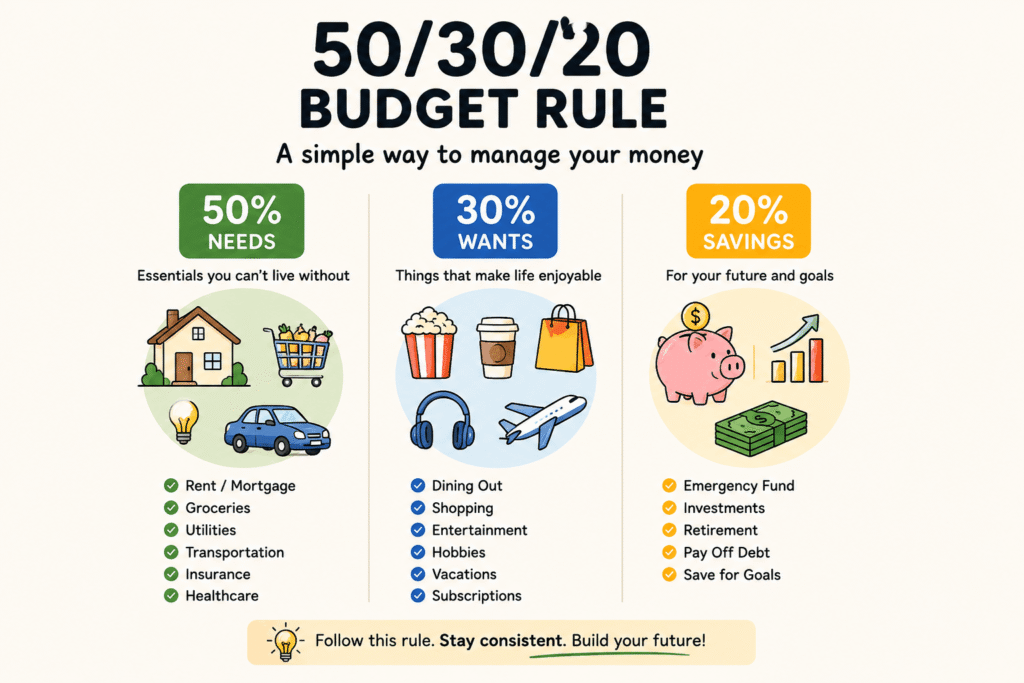
What Counts as “Needs”? (50%)
Needs are things you must pay for.
Without them… Daily life becomes difficult. Examples include:
- Rent or mortgage
- Groceries
- Electricity and water bills
- Health insurance
- Transportation
- Internet for work
- Essential medicines
Think of these as your survival expenses.
What Counts as “Wants”? (30%)
Wants make life enjoyable. But you can live without them. Examples include:
- Netflix subscriptions
- Dining out
- Coffee from your favorite café
- Shopping for fun
- Gaming
- Weekend trips
- New gadgets
These expenses are okay… As long as they stay within your budget
If you struggle to keep your “Wants” under control due to social pressure, you need to practice, Loud Budgeting—the new financial trend that makes saying “no” to spending cool.
What Goes Into Savings? (20%)
This is the part that builds your future. Instead of spending every dollar… You pay yourself first. Your 20% can go toward:
- Emergency fund
- Retirement savings
- Investing
- Paying off debt faster
- Saving for a home
- Starting a business
Future You will thank Present You.
A Real-Life Example
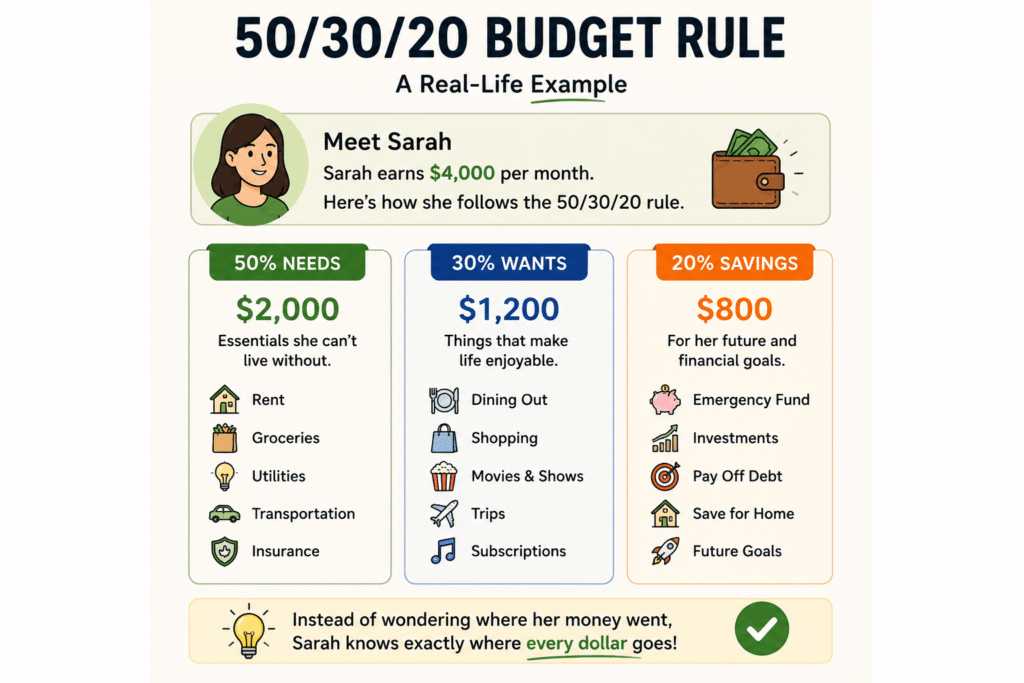
Let’s meet Sarah. Sarah earns $4,000 per month. Using the 50/30/20 Rule: 50% Needs = $2,000 Rent, groceries, bills, transport. 30% Wants = $1,200 Restaurants, shopping, movies, subscriptions. 20% Savings = $800 Emergency fund and investments. Instead of wondering where her money disappeared… Sarah knows exactly where every dollar goes. Less stress. More control.
Why This Budget Rule Actually Works
Most budgets fail. Why? Because they’re too strict. People feel trapped. Then they quit. The 50/30/20 Rule is different. It allows you to enjoy life. Without destroying your future. That’s why beginners love it.
Common Budgeting Mistakes
Many people unknowingly make these mistakes:
- Spending first and saving later.
- Buying things just to impress others.
- Ignoring small daily expenses.
- Using credit cards without a repayment plan.
- Having no emergency savings.
Small mistakes repeated every month become big financial problems
How to Start Using the 50/30/20 Rule Today
You don’t need special software. Start with these simple steps.
Step 1: Calculate Your Monthly Income
Write down how much money you receive after taxes. That’s your starting point.
Step 2: Track Every Expense
For one week… Write down every purchase. Even the small ones. You’ll be surprised where your money goes.
Step 3: Divide Your Money
Use this formula.
- 50% → Needs
- 30% → Wants
- 20% → Savings
Keep it simple.
Step 4: Automate Your Savings
Set an automatic transfer every payday. If the money leaves your account first… You won’t be tempted to spend it.
Step 5: Review Every Month
Life changes. Your budget should too. Check what worked. Fix what didn’t. Repeat.
What If Your Expenses Don’t Fit the Rule?
That’s completely normal. Many beginners can’t follow the 50/30/20 Rule perfectly. Maybe your rent is expensive. Maybe you’re paying off debt. That’s okay. Think of the rule as a guide. Not a strict law. Even moving toward the rule is progress
Benefits of the 50/30/20 Budget Rule
Here are some reasons why people love this budgeting method:
- Easy for beginners.
- Reduces financial stress.
- Helps build savings faster.
- Prevents overspending.
- Creates better money habits.
- Makes financial decisions easier.
- Encourages long-term wealth building.
Small changes today create big financial freedom tomorrow.
Money Is About Habits, Not Income
Many people think… “I’ll save money when I earn more.” But that’s rarely true. If someone can’t manage $2,000 wisely… Managing $5,000 won’t magically become easy. Good money habits matter more than a bigger paycheck. Building good money habits is 80% behavior and only 20% head knowledge. Read our guide on, The Psychology of Money to master your financial mindset).
Final Thoughts
.The 50/30/20 Budget Rule isn’t about restricting your life. It’s about giving every dollar a purpose. You don’t need to be rich. You don’t need to be a finance expert. You just need a plan. Start small. Stay consistent. And remember… Financial freedom doesn’t happen overnight. It happens one smart decision at a time
Frequently Asked Questions
Q.1. Is the 50/30/20 Budget Rule good for beginners?
Ans. Yes. It’s one of the easiest budgeting systems because it’s simple, flexible, and easy to remember.
Q.2. Can I use this rule with a low income?
Ans. Absolutely. The percentages may not be perfect at first, but following the idea of balancing needs, wants, and savings can still improve your finances.
Q.3. What if my needs take more than 50% of my income?
Ans. That’s common, especially in high-cost areas. Try reducing unnecessary wants or increasing your income over time. Use the rule as a goal rather than a strict requirement.
Quick Tips to Improve Your Budget Today
- Track every expense for one week.
- Cancel subscriptions you don’t use.
- Cook at home more often.
- Save automatically on payday.
- Avoid impulse shopping.
- Set one clear financial goal.
- Review your budget every month.
One Question That Could Change Your Financial Future
If every dollar you earned had a job, would you still wonder where your money went?
The Answer
Probably not. When every dollar has a purpose, your money starts working for you instead of disappearing without notice. Budgeting isn’t about having less. It’s about making the most of what you already have. That’s the real secret to building wealth.
Financial Disclaimer
This article is for informational and educational purposes only and should not be considered financial, investment, tax, or legal advice. The information presented is general in nature and may not be appropriate for every individual’s financial circumstances. Investment products involve risk, including the potential loss of principal. Past performance does not guarantee future results, and hypothetical examples are not predictions of actual investment performance. Savings account interest rates, account terms, retirement contribution limits, and tax rules may change. Before making financial decisions, verify current information with the relevant financial institution, the Internal Revenue Service, or a qualified financial, tax, or legal professional. Readers are responsible for evaluating their own financial circumstances and making decisions that align with their needs and goals.
### 📚Recommended Reads For Your Growth
If you want to master your mindset and take complete control of your life, check out these highly recommended guides from MindGrowthHub:
- Loud Budgeting: Why Saying “No” to Spending Is the New Status Symbol — Learn how to set strong financial boundaries and stop spending money just to impress others.
- The Psychology of Money: Master Your Financial Mindset — Understand the hidden emotional triggers behind your spending habits and how to fix them.
- The 5-Minute Rule: How to Beat Procrastination and Start Anywhere — Stop making excuses, build consistency, and crush your goals with this simple productivity trick.
- The Power of Saying “No” to Protect Your Peace — A complete guide to saving your mental energy, time, and focus from daily distractions.



Pingback: 7 Smart Ways to Save Money Without Giving Up Everything You Enjoy
Pingback: 7 money mistakes young people make
Pingback: How to Build Wealth If You Start Late: 10 Steps
Pingback: How to Stop Seeking Approval & Live Your Own Life by 12 ways
Pingback: 10 Powerful Ways: How to Master Your Emotions Today
Pingback: 12 Simple Ways to Master The 1% Better Rule Today
Pingback: How Much Emergency Fund 101 Do I Need?
Pingback: How to Stop Procrastinating: The 5-Minute Rule That Works
Pingback: How to Say No Without Guilt: Set Healthy Boundaries
Pingback: Money Mindset: 7 Shifts That Help You Build Wealth
Pingback: Dopamine Detox: Train Your Brain to Enjoy Hard Things
Pingback: How to Build Your Credit Score From Scratch (2026 Guide)