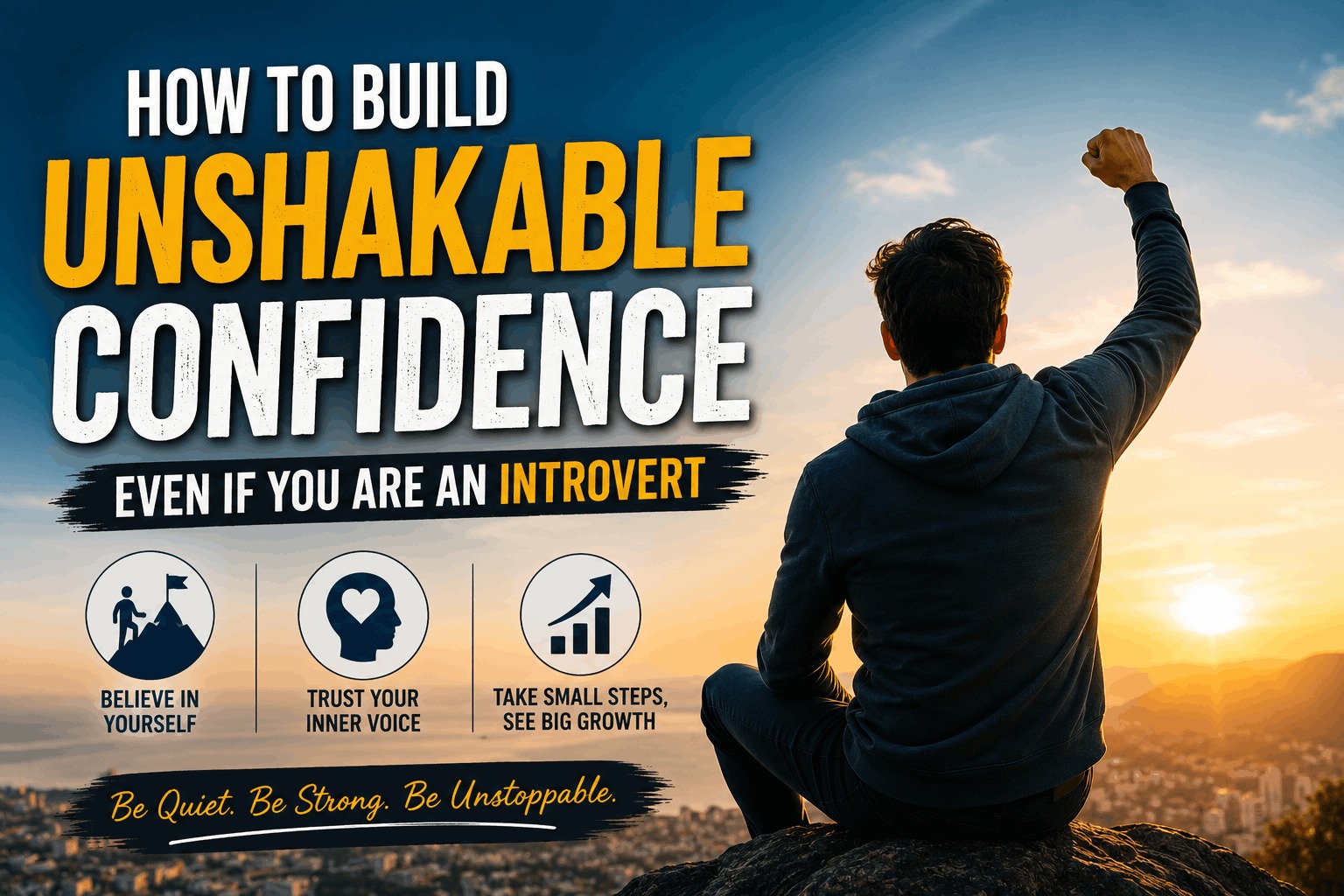
If you want to learn how to build confidence from scratch, you don’t need to change who you are. Let me ask you something. If someone asked you today, “What’s one thing you’re proud of this week?” Would you have an answer? Most people immediately think about big achievements. Have you ever watched someone walk into a room and instantly grab everyone’s attention? They weren’t shouting. They weren’t trying to impress anyone. But somehow, people noticed them. Meanwhile, you stayed quiet.
Not because you had nothing to say. You just kept thinking, “What if I say something stupid?” If this sounds familiar, you’re not alone. Many introverts believe confidence belongs only to outgoing people. It doesn’t. Being quiet and being insecure are two completely different things. Some of the most confident people you’ll ever meet don’t talk much. They simply trust themselves. That’s the real difference. Confidence isn’t about having the loudest voice. It’s about believing your voice matters.
Confidence Isn’t Something You’re Born With
A lot of people think confident people are just lucky. As if they were born without fear. That’s rarely true. Think about riding a bicycle. The first time felt scary. You probably wobbled. Maybe you even fell. But after practicing for a while, you stopped thinking about balancing. Your confidence came from experience. Not magic. The same thing happens in everyday life. Talking to strangers. Giving presentations. Applying for a new job. The first few attempts feel uncomfortable. After enough practice, they start feeling normal. Confidence grows through action. Not waiting.
Introverts Have a Hidden Advantage
Here’s something most people don’t realize. Introverts usually listen more than they speak That sounds simple. But it’s incredibly powerful. Imagine two people at a meeting. One person talks nonstop. The other listens carefully, asks one thoughtful question, and gives one useful idea. Who do you think people remember? Often, it’s the second person. People don’t remember who talked the longest. They remember who added value. Confidence isn’t measured by the number of words you speak. It’s measured by the quality of what you say.
Stop Trying to Be Someone Else
One of the fastest ways to lose confidence is pretending to have a different personality. Maybe you’ve tried it before. You watched confident people online. Then copied the way they talked. The way they laughed. Even the way they walked. For a few minutes, it worked. Then it became exhausting. Because pretending always is. Real confidence starts when you stop chasing someone else’s personality. You don’t need to become the loudest person in the room. You only need to become the most comfortable version of yourself.
Your Brain Is Watching Everything You Do
This might surprise you. Every small promise you break teaches your brain something. Imagine telling yourself, “I’ll wake up at 7 tomorrow.” The alarm rings. You hit snooze three times. Nothing terrible happens. But your brain quietly learns something. “I don’t always do what I say.” Now imagine making one tiny promise. Reading two pages. Taking a ten-minute walk. Drinking enough water. And actually doing it. Those small wins slowly build trust. Not with other people. With yourself. And self-trust is where real confidence begins.
Confidence Doesn’t Mean You Never Feel Nervous
Even experienced speakers feel nervous before walking onto a stage. Athletes feel nervous before important games. Actors feel nervous before performing. The difference isn’t that they never feel fear. The difference is they don’t let fear make every decision. Feeling nervous doesn’t mean you’re not confident. It simply means something matters to you. That’s completely normal. Don’t wait until fear disappears. Most confident people simply learn how to move forward while feeling it.
The Smallest Wins Create the Biggest Confidence
Let me ask you something. If someone asked you today, “What’s one thing you’re proud of this week?” Would you have an answer? Most people immediately think about big achievements. Getting promoted. Buying a house. Starting a business. But confidence isn’t built only on huge moments. It’s built on tiny victories that nobody else even notices. Maybe you finally cleaned your room after putting it off for weeks. Maybe you went for a walk instead of scrolling Instagram for an hour.
Maybe you spoke up once during a meeting instead of staying silent. These things may look small. Your brain doesn’t think they’re small. Every time you keep a promise to yourself, your confidence grows a little. And the best part? Nobody can take those wins away from you. If you want to learn how these tiny daily victories compound into massive growth, read our guide on 12 Simple Ways to Master The 1% Better Rule Today.”
Stop Waiting Until You Feel “Ready”
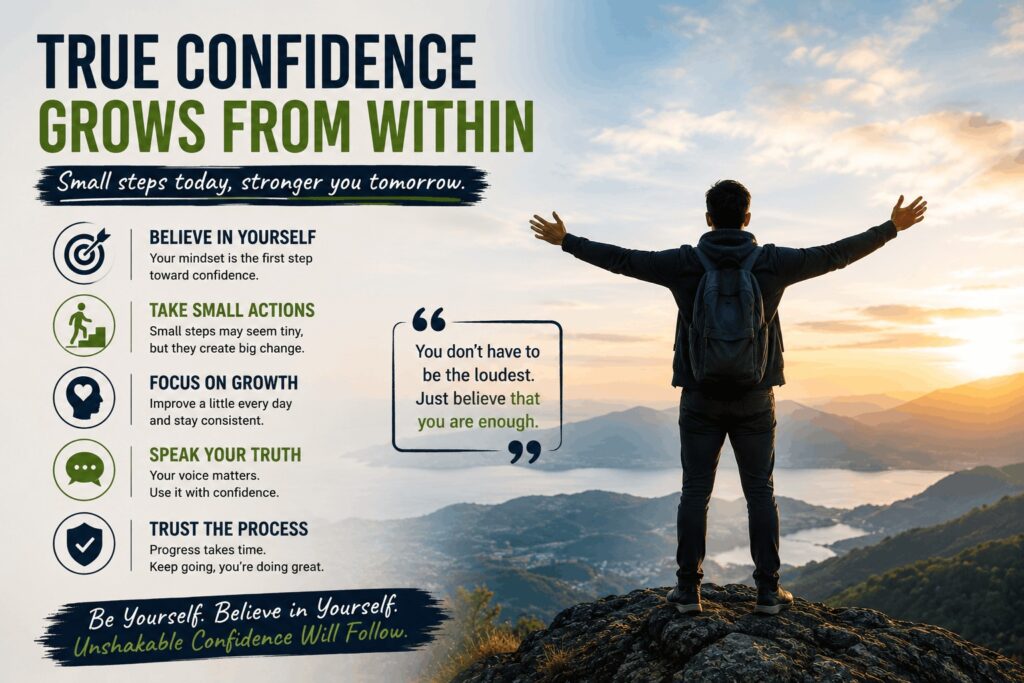
This is where many introverts get stuck. They tell themselves, “I’ll speak when I’m more confident.” “I’ll apply for that job after I improve my skills.” “I’ll start my YouTube channel when I’m better.” Sounds reasonable. But here’s the problem. That perfect moment almost never arrives. Think about learning to swim. Would reading ten books about swimming make you comfortable in the water? Probably not. At some point, you have to get in. Confidence works exactly the same way. You don’t become confident first and then take action. You take action first. Confidence quietly follows.
Most People Aren’t Judging You
Here’s something I wish more people realized. Everyone is busy thinking about themselves. The person you’re worried about impressing… Is probably worried about what others think of them. Imagine dropping your pen during a meeting. You might think everyone noticed. By lunchtime, almost nobody remembers it happened. We often believe we’re being watched all the time. Psychologists even have a name for this. It’s called the spotlight effect. We feel like a spotlight is always on us. In reality…
Most people are too busy dealing with their own lives. . According to psychological studies on social anxiety by Harvard Health, realizing that others aren’t analyzing your every move is a major step in learning how to build confidence in social situations. Knowing this can feel surprisingly freeing.
Confidence Grows Faster When You Stop Comparing
Social media has made confidence much harder. You open your phone. One friend just got promoted. Someone else bought their dream car. Another person is traveling across Europe. Within five minutes, your own life suddenly feels boring. But you’re comparing your ordinary Tuesday with someone else’s best photo. Nobody posts the rejection email. Nobody posts the panic attack before the presentation. Nobody uploads the hundred failed attempts. You’re seeing the highlight reel. Not the full movie.
The only comparison that actually helps is this: “Am I improving compared to the person I was six months ago?” If the answer is yes… You’re already moving in the right direction. But remember, when you see others online, your feelings can hijack your mind. To handle this, check out our article on How to Master Your Emotions Before They Master You.”
Quiet Confidence Is Often the Strongest Confidence
Some people walk into every room trying to prove something. They interrupt. They dominate conversations. They always need attention. That isn’t always confidence. Sometimes it’s insecurity wearing a loud voice If you want to know how to build confidence that lasts, you need to understand that. Real confidence looks different. It stays calm. It listens. It doesn’t panic when someone disagrees. It doesn’t feel the need to win every conversation. Think about the people you genuinely respect. They’re usually not the loudest. They’re the ones who make everyone else feel comfortable. That’s a different kind of strength. And introverts are often naturally good at it.
Build Evidence, Not Excuses
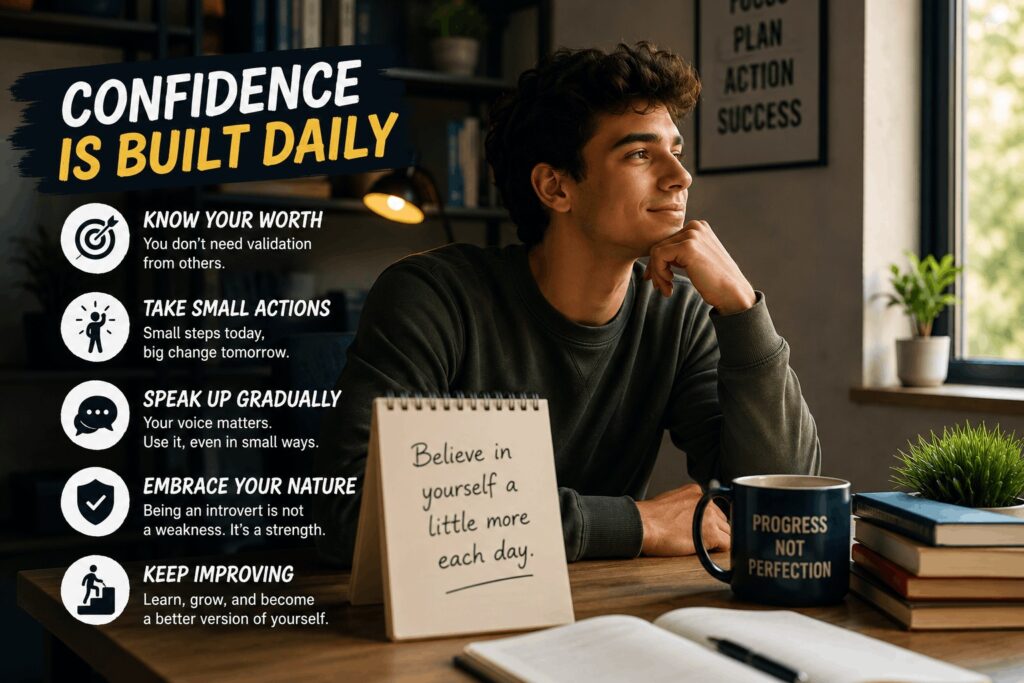
Imagine two notebooks. The first notebook is filled with reasons why you can’t succeed. “I’m too shy.” “I’m not experienced.” “People won’t listen to me.” Now imagine another notebook. Every day you write one small thing you did well. Finished a workout. Made a difficult phone call. Started reading again. Applied for one new opportunity. After three months… Which notebook would make you feel more confident? Your brain believes the evidence you give it. So start collecting evidence that you’re capable. Even if it’s just one small win every day.
Final Thoughts
Confidence isn’t a personality trait. It’s a collection of small promises you keep to yourself. You don’t need to become louder. You don’t need to change who you are. You don’t need everyone’s approval. You simply need enough trust in yourself to keep moving, even when things feel uncomfortable. Some days you’ll speak confidently. Some days you’ll stay quiet. Both are okay. Because confidence isn’t about always having the perfect words. It’s about knowing your value even when you’re silent. So don’t wait until fear disappears. Don’t wait until you feel perfect. Start with one conversation. One decision. One small step. Months from now, you’ll probably look back and wonder why you ever doubted yourself.
Frequently Asked Questions
Can introverts become confident?
Absolutely. Confidence has nothing to do with being loud. Many introverts become highly confident by building skills, gaining experience, and trusting themselves through small daily actions.
Why do introverts struggle with confidence?
Many introverts spend more time thinking before acting, which can sometimes lead to self-doubt. With practice and small wins, they can build strong and lasting confidence.
How can I become more confident every day?
Focus on keeping small promises to yourself, speaking up a little more often, learning new skills, and celebrating small progress instead of waiting for perfection.
Is confidence something you’re born with?
No. Confidence is developed through experience, consistent action, and self-trust. Like any skill, it grows stronger the more you practice it.
Before you close this page, ask yourself one simple question:
What’s one small thing you’ve been avoiding because of fear?
Don’t make a huge plan. Don’t wait for Monday. Do that one thing today. Your confidence won’t arrive first.