Have you ever changed your opinion just because you were afraid someone might disagree? Maybe you said yes when you wanted to say no. Maybe you bought something expensive because everyone else had it, or chose a career that made your family proud but left you feeling empty. If any of that sounds familiar, you’re not alone.
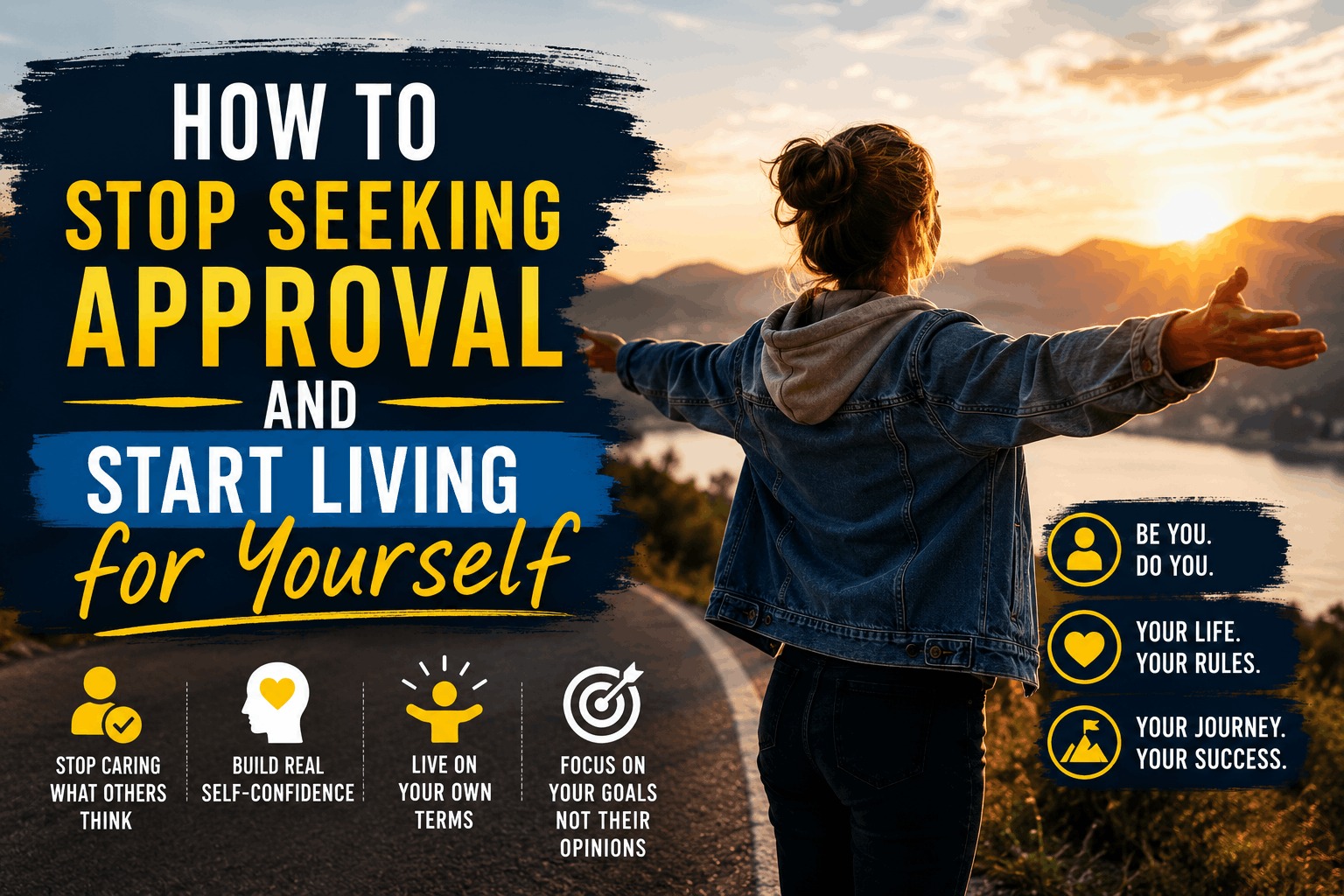
Almost everyone wants to be accepted; it’s a fundamental part of being human. However, the problem begins when approval becomes more important than your own happiness. Slowly, without even noticing, your life stops becoming yours. Instead, it becomes a constant performance. You start making decisions not because they’re right for you, but because you’re hoping someone else will validate them. Learning how to stop seeking approval is the first step to reclaiming your freedom from this exhausting way to live.
1. The Approval Trap Starts Earlier Than You Think
Think back to your childhood. Most of us were praised primarily for doing the “right” thing—getting good grades, displaying good behavior, and following rules. Hearing words like “Good job” or “We’re proud of you” felt amazing, and there’s nothing wrong with that.
The problem is the subconscious belief we develop next. We quietly learn that love, safety, and acceptance only come after pleasing other people. As adults, this habit doesn’t disappear; it simply changes shape. Now, we seek approval from bosses, friends, partners, social media followers, and even strangers we’ve never met. Without realizing it, we spend years asking, “Do they like me?” instead of asking, “Do I like the life I’m creating?”
2. Why Seeking External Validation Feels So Powerful
Imagine posting a photo online. You tell yourself you don’t care about the likes, but an hour later, you check anyway. Then again, and again. why does this happen?
Every notification gives your brain a tiny hit of dopamine. For a brief moment, you feel noticed, accepted, and important. The feeling is completely real, but it doesn’t last. Soon enough, you’re looking for the next compliment, the next like, and the next piece of validation. That’s why approval can quietly become addictive. It’s not because we are weak; it’s because our brains are naturally wired to enjoy feeling accepted.
3. The Hidden Cost of Pleasing Everyone
Here’s something many people don’t realize: every time you say yes to something you don’t want, you are actively saying no to yourself.
Imagine your coworker asks you to stay late again. You already have plans and you’re exhausted, but you agree anyway because you don’t want them to think you’re selfish. It feels like a small decision, until it happens every week. Eventually, you begin feeling frustrated. You aren’t resentful because people keep asking; you’re resentful because you’ve trained them to expect a “yes” every single time. People-pleasing often starts with kindness, but over time, it slowly morphs into deep resentment.
📚 ALSO READ OUR POPULAR GUIDES:
- 📌 Best Money Habits in Your 20s: 5 Rules to Get Rich — Learn how making small, independent decisions in your youth can buy you the ultimate freedom later in life.
4. You Will Never Please Everyone Anyway
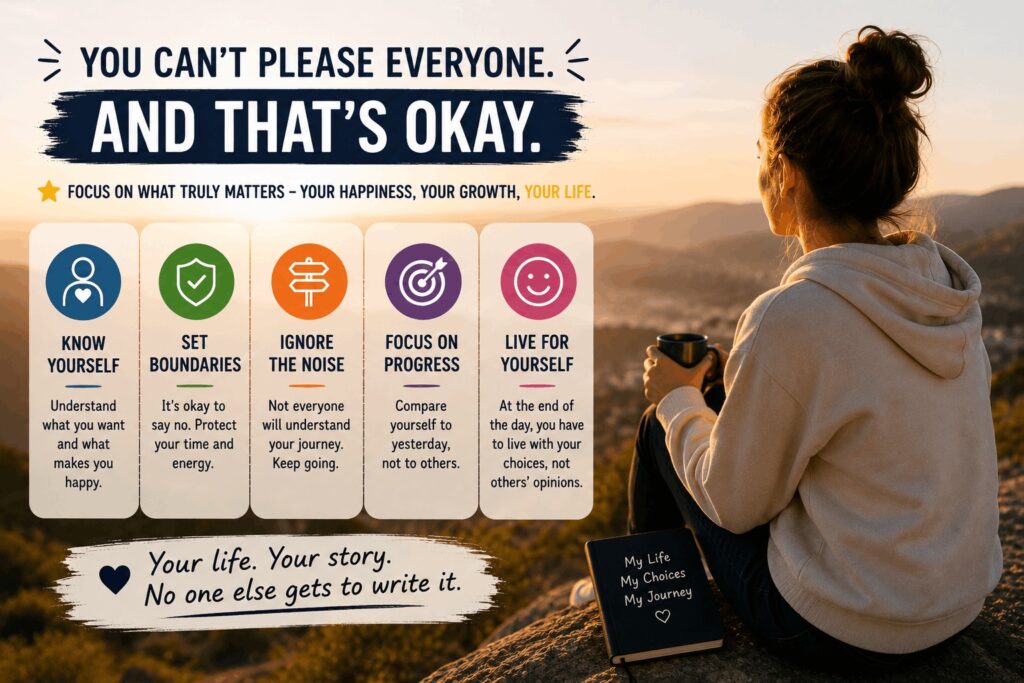
This is one of the hardest but most liberating lessons to learn. No matter what you do, someone will disagree, someone will criticize, and someone will misunderstand your intentions.
Imagine opening a new coffee shop. One customer says it’s the best coffee in town, another says it’s too strong, and someone else says it’s too expensive. Who’s right? Maybe all of them are, because everyone sees the world through their own lens. If complete approval is mathematically impossible, why spend your entire life chasing it?
Instead of looking outward, redirect that energy toward understanding your own mind. If you find yourself struggling with constant worry, learning about mindfulness practices can help quiet the noise of other people’s expectations.
5. Confidence Grows When Decisions Become Yours
A friend of mine almost became a lawyer. He didn’t love the law, but his family desperately wanted him to pursue it. At the last minute, he changed direction and studied graphic design instead. At first, people questioned his decision, and some even called it a massive mistake. Today, he runs a highly successful design business.
Looking back, he once told me something I’ll never forget: “The hardest part wasn’t changing careers. It was accepting that not everyone would understand my choice.” That’s the price of living your own life. Sometimes people won’t clap for your decisions. Make them anyway if they’re right for you.
6. Your Self-Worth Can’t Depend on Other People’s Opinions
Imagine giving ten different people the exact same painting. Some will love it, some won’t care, and someone might even hate it. Did the painting itself change? No. Only the subjective opinions changed.
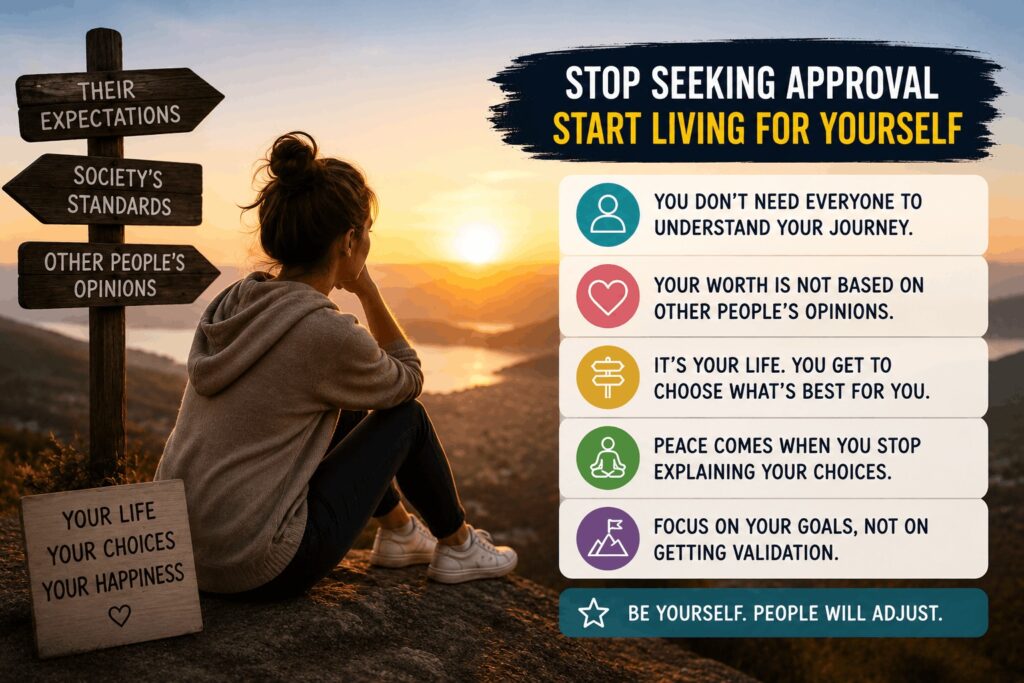
The exact same thing happens with you. Your intrinsic value doesn’t increase because someone praises you, and it doesn’t disappear because someone criticizes you. Learning how to detach your identity from external opinions takes time, but once it finally clicks, life becomes much lighter.
7. Stop Asking for Permission to Live Your Life
Many people spend years waiting for someone to tell them, “Go ahead,” “You’re ready,” or “You have my blessing.” The truth is, that perfect moment of universal approval may never come.
Whether you want to learn a new skill, start a business, move to a new city, or change careers, someone will always think it’s too risky. Someone will always tell you to play it safe. If you keep waiting until everyone agrees, you might never start. Sometimes, the ultimate act of confidence is making a decision before anyone else believes in it.
8. Social Media Makes Approval Harder to Ignore
Twenty years ago, you mostly compared yourself to people you actually knew. Today, you are comparing your daily reality to celebrities, influencers, millionaires, and highly curated profiles before you’ve even had breakfast. It’s exhausting.
Your brain quietly starts asking, “Why am I falling behind?” But here’s what social media rarely shows:
- The mounting credit card debt behind those luxury trips.
- The crushing loneliness behind perfect couple photos.
- The self-doubt and career failures hidden behind the success posts.
You’re comparing your messy, real life to someone else’s highlight reel. That is never a fair comparison.
9. Learn to Say “No” Without Feeling Guilty
For many people, “No” feels like a dangerous, confrontational word. They worry people will become angry, disappointed, or stop liking them. However, emotionally healthy people respect healthy boundaries.
If a friend asks you to lend them money and you genuinely cannot afford it, saying yes might make them happy today, but it will create massive financial stress for you tomorrow. Saying no isn’t selfish; it is responsible. Every boundary you set protects something valuable—your time, your energy, and your mental peace.
10. Not Everyone Needs to Understand Your Journey
One of the biggest mistakes people make is over-explaining every decision they make. They feel obligated to explain why they changed jobs, why they stayed single, why they moved, or why they cut out toxic people.
The reality is simple: some people will just never understand you, and that is completely okay. Your life is not a group project. Not every major decision needs public approval. Sometimes, quiet confidence speaks much louder than long, defensive explanations.
11. Build a Genuine Relationship With Yourself
Here’s a question that sounds incredibly simple but is surprisingly difficult to answer: When was the last time you asked yourself, “What do I actually want?”
Not what your parents want, not what your partner expects, and not what social media tells you is cool—but what you actually want. Many people become absolute experts at reading and meeting everyone else’s expectations while completely losing touch with their own. Spend more time listening to your own thoughts. The stronger your relationship with yourself becomes, the less control outside opinions will have over you.
12. Start Measuring Success Differently
Many people measure their success by external applause—likes, followers, compliments, promotions, and public recognition. But those things are entirely dependent on other people.
Instead, start measuring your success by questions only you can answer:
- Did I stay true to my core values today?
- Did I make a decision I genuinely believe in?
- Did I become a little braver than I was yesterday?
These are the answers that truly matter because nobody else can grant them, and nobody can take them away from you.
Final Thoughts: Your Purpose Isn’t to Please Everyone
Seeking approval is completely normal. Every human wants to feel accepted and valued. But when approval becomes your primary goal, you slowly stop living your own life. Freedom begins the moment you stop asking, “Will everyone like this?” and start asking, “Is this right for me?”
At the end of the day, the person you have to live with forever isn’t your boss, your friends, or strangers on the internet. It’s you. Make sure you are building a life that you are genuinely proud of.
Frequently Asked Questions (FAQs)
Why do I always seek approval from others?
Many people develop deep approval-seeking habits during childhood through conditional praise, harsh criticism, or a fear of rejection. These habits quietly carry over into adult relationships and workplaces.
Is seeking approval always a bad thing?
Not at all. Wanting social acceptance is a natural human trait. It only becomes harmful and toxic when your personal happiness and self-worth depend entirely on other people’s opinions.
How can I stop caring about what others think?
You can start by identifying your own core values, setting firm boundaries, limiting social media comparisons, and making small daily decisions based on what feels right for you rather than what impresses others.
Does confidence mean totally ignoring everyone’s opinion?
No. Truly confident people still listen to constructive feedback and advice. The key difference is that they process it objectively and do not allow random opinions to control their final decisions.
Can I actually build my self-confidence over time?
Absolutely. Confidence is not a genetic trait you are born with. It is a muscle built through consistent actions, keeping small promises to yourself, and learning to trust your own judgment over time.