
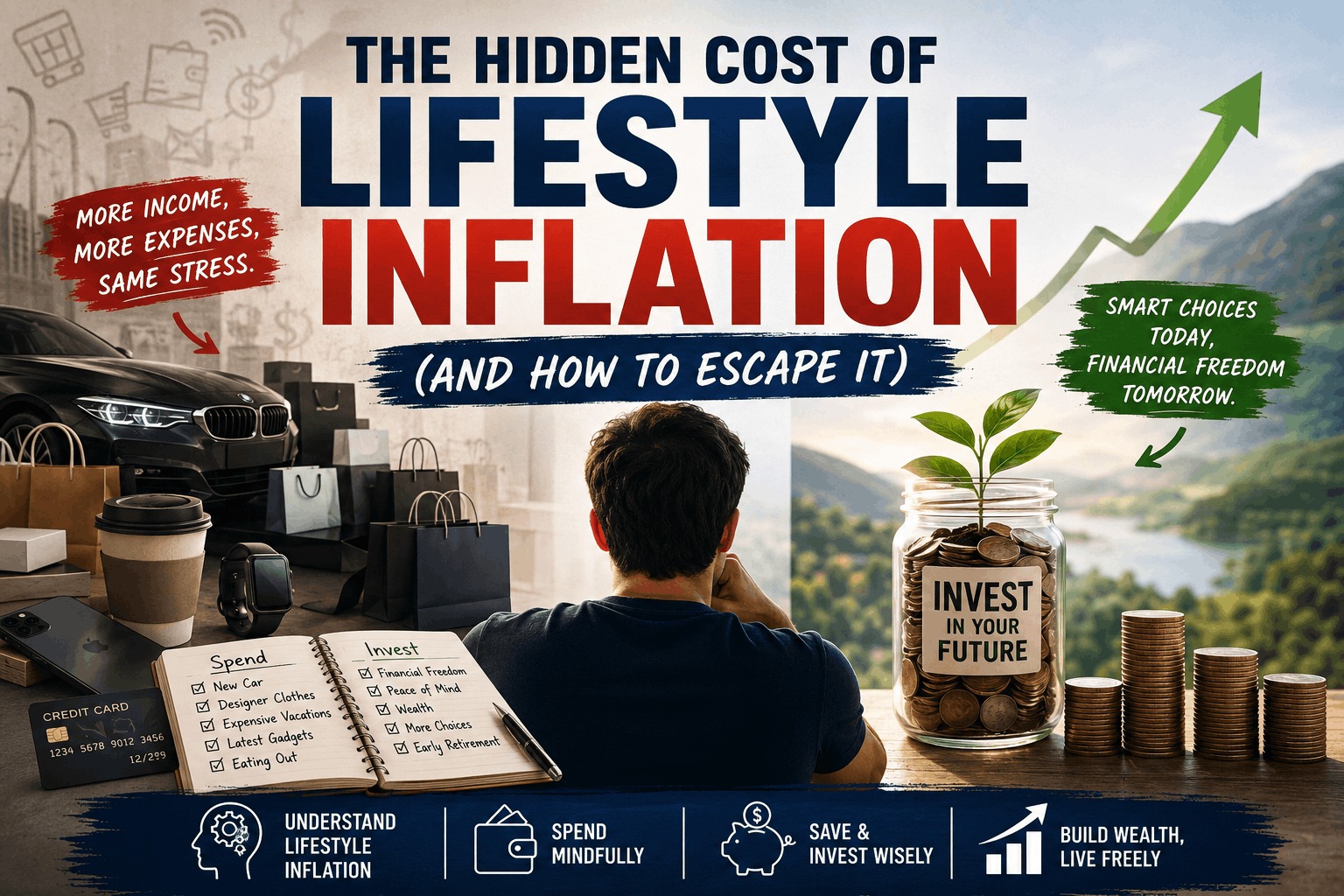
A few years ago, one of my friends got the biggest salary raise of his career. Everyone expected him to be happier. And honestly… so did he. The first month was exciting. He upgraded his phone, started ordering food more often, moved into a nicer apartment, and bought a newer car. Nothing looked unreasonable on its own.
But about a year later, we were having coffee together when he said something that surprised me: “I earn almost twice as much as I did three years ago… but somehow, I still feel broke.”
That sentence stayed with me because it’s becoming more common than people realize. Many people don’t stay financially stuck because they earn too little. They stay stuck because every time their income grows, their spending quietly grows with it. This has a name—it’s called lifestyle inflation. If you don’t learn how to avoid lifestyle inflation early, it can steal years of financial progress without making any noise.
What Exactly Is Lifestyle Inflation?
Lifestyle inflation happens when your expenses increase every time your income increases. Imagine you receive a $500 monthly raise. Instead of saving or investing part of it, you immediately start spending more. You get a more expensive gym membership, a bigger streaming package, weekend trips, daily coffee from your favorite café, and better clothes.
None of these purchases seem like a mistake. After all, you can afford them now. The problem isn’t one big purchase; it’s dozens of small upgrades happening at the same time. Six months later, your paycheck is bigger, but your savings account looks almost exactly the same.
More Income Doesn’t Always Mean More Freedom
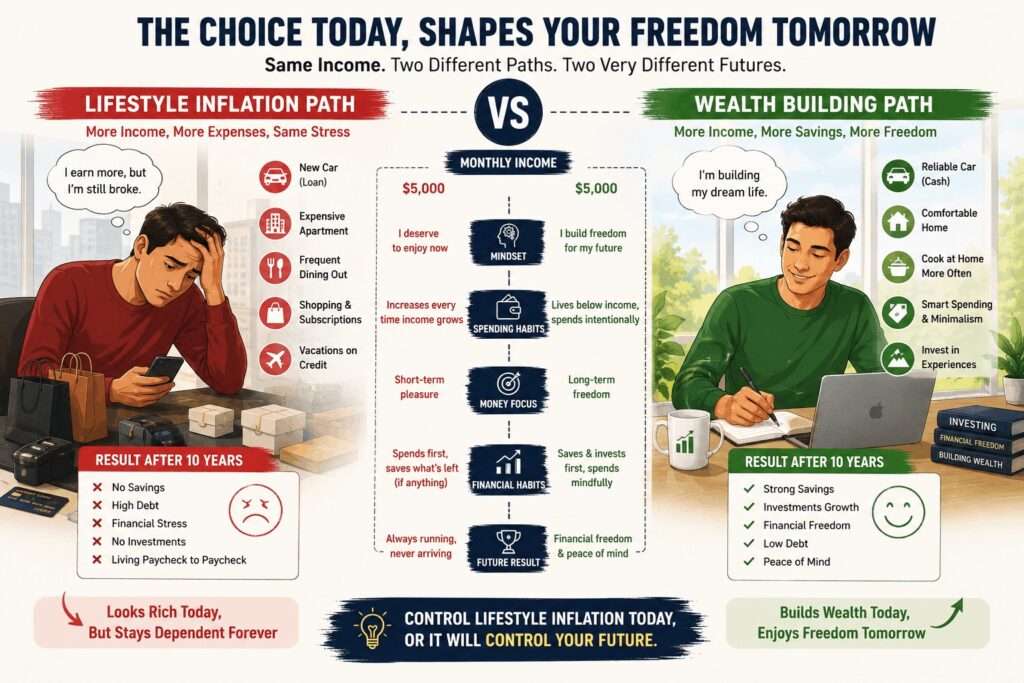
Most people believe that earning more money automatically solves financial problems. Sometimes it does, but not always. Imagine two coworkers who both receive the same promotion and earn an extra $12,000 a year.
- The first person decides to increase monthly investments and build an emergency fund.
- The second person upgrades almost everything—a newer car, a luxury apartment, premium subscriptions, and more shopping.
Five years later, they have completely different financial lives. One has growing investments and fewer money worries, while the other still waits for payday every month. The salary wasn’t the difference; the decisions were.
📚 RECOMMENDED READING FOR YOU:
- 📌 How to Build Wealth Even If You Start Late — Read our complete guide on how to catch up financially, build powerful money habits, and secure your future even if you are starting later in life.
Why Lifestyle Inflation Traps Most Earners
Understanding why we fall into this trap is the first step toward escaping it. It usually happens quietly, driven by subtle daily triggers.
The Upgrades Feel Small Until You Add Them Together
Most people never wake up and decide, “I’m going to waste my money today.” Instead, spending happens quietly—an extra $12 for food delivery, a subscription you forgot about, a coffee every morning, or a phone upgrade because the new one looks nicer even though the old one works perfectly.
None of these purchases seem life-changing, and that’s exactly why they’re dangerous. Imagine a small leak in a water bottle. You barely notice it at first, but leave it long enough, and the bottle becomes empty. Money often disappears the same way.
Social Media Makes Lifestyle Inflation Worse
Scroll through social media for ten minutes. Someone is showing a luxury vacation, someone else just bought a new house, and another person is driving a brand-new car. It starts to feel normal. Without realizing it, your brain quietly changes its definition of “success.”
Suddenly, what was once a luxury begins to feel like a necessity. That’s one of the biggest traps of social media. You’re constantly seeing finished results—not the loans, the credit card bills, or the financial stress hiding behind those pictures. Trying to match someone else’s lifestyle is one of the fastest ways to delay your own financial goals.
It Doesn’t Only Affect Rich People
Many people think this only happens after becoming wealthy. Actually, it often starts with the very first raise. Someone earning $40,000 upgrades to a more expensive apartment, someone earning $60,000 finances a luxury car, and someone earning $90,000 starts living exactly like someone earning $90,000.
Every increase in income immediately becomes higher spending. As a result, income keeps growing, but wealth doesn’t. That’s why you sometimes meet people with impressive salaries who still feel financially stressed. The issue isn’t how much they earn; it’s how quickly their lifestyle grows alongside their paycheck.
How to Avoid Lifestyle Inflation: 5 Practical Steps
You don’t need to live an extreme, restrictive lifestyle to protect your money. You just need to change the way you manage your cash flow.
1. The Secret Isn’t Spending Less, It’s Spending Smarter
The goal isn’t to stop buying things; the goal is to stop buying things that don’t actually improve your life. Imagine spending $300 on a course that helps you earn a better salary. Now compare that with spending $300 on clothes you’ll wear twice.
Both cost the same, but only one keeps giving you value years later. Smart spending asks one simple question before every purchase: “Will my future self be happy I bought this?”
2. Pay Yourself Before You Pay Everyone Else
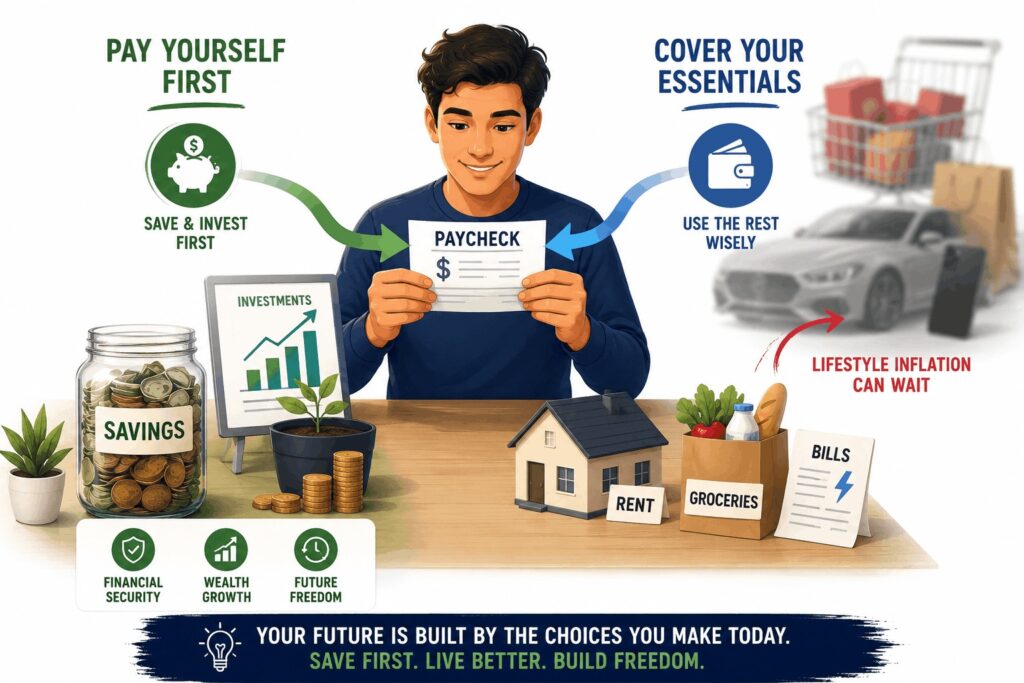
Here’s a habit that quietly separates people who build wealth from people who don’t. The moment your paycheck arrives, move money into savings or investments first—not after shopping, and not after paying for entertainment.
When a small percentage automatically goes into your savings account before you check online stores or make weekend plans, saving no longer depends on willpower. It becomes part of an automated financial system.
3. Learn to Enjoy Delayed Gratification
We live in a world where almost everything is instant. Food arrives in minutes, movies start immediately, and shopping takes one click. Your money habits become much stronger when you learn to wait.
Try the 48-hour rule. When you see something online that you really want, wait 48 hours before clicking buy. Many times, you’ll completely forget about it. This is how you separate genuine needs from temporary excitement.
4. Build a Lifestyle You Can Afford Forever
One mistake many people make is creating a lifestyle that only works when everything goes perfectly. As long as the salary keeps increasing, everything feels fine.
But what happens if hours are reduced, a business slows down, or unexpected expenses appear? According to financial health principles on personal budgeting, true stability is about having a lifestyle you can comfortably maintain during tough times.
5. Ask Yourself One Question Before Every Raise
The next time your income increases, don’t immediately ask, “What can I buy?” Instead ask, “What percentage of this raise can I keep?”
If you get a $600 monthly raise, automatically invest $300 and enjoy the other $300. Now your current lifestyle improves, and your future financial freedom improves too. Both can happen together.
Wealth Often Looks Surprisingly Boring
Think about the people who quietly build long-term wealth. Many of them don’t look wealthy at all. They don’t always drive luxury cars or constantly upgrade everything they own. Instead, they invest consistently, avoid unnecessary debt, live below their means, and allow time to do most of the work.
Your future lifestyle depends entirely on today’s choices. Most people use today’s income to create today’s status, while wealthy people use today’s income to create tomorrow’s freedom.
Final Thoughts: Focus on Freedom Over Status
Lifestyle inflation isn’t about expensive cars or luxury vacations; it’s about tiny upgrades that quietly become permanent expenses. Most people never notice it happening until years pass and they wonder why earning more money hasn’t created more options.
You don’t need to live in extreme deprivation to escape it. You simply need to become intentional. Save before spending, invest before upgrading, and remember: the goal isn’t to look wealthy; the goal is to become financially free.
Frequently Asked Questions (FAQs)
What is lifestyle inflation in personal finance?
Lifestyle inflation happens when your spending increases at the exact same pace as your income, making it incredibly difficult to build emergency savings or long-term wealth.
Is lifestyle inflation always a bad thing?
Not necessarily. Upgrading your quality of life, eating healthier, or moving to a safer neighborhood is perfectly fine. The problem only begins when every salary increase immediately turns into higher fixed monthly bills.
How can I easily avoid lifestyle inflation?
The most effective way is to automate your savings. Set up your bank account to automatically route a percentage of your paycheck into investments the day you get paid, before you have a chance to spend it.
Why do high-income earners still live paycheck to paycheck?
Because they inflate their lifestyle as fast as their salary grows. If you earn $100,000 but spend $100,000, your net wealth remains exactly the same as someone earning far less.
What is the best habit to control lifestyle creep?
Treat every single raise as an opportunity to increase your investment rate first. If you commit to saving at least 50% of any new raise, you can still enjoy your success while building wealth.
📚 Related Articles
If you enjoyed this article, you might also like:
🔹 How to Build Wealth Even If You Start Late
Learn how small, consistent money habits can help you build long-term wealth, no matter when you begin.
🔹 Best Money Habits in Your 20s: The Small Decisions That Can Make You Rich Later
Discover practical financial habits that can create a stronger future, whether you’re in your 20s or just getting started.
🔹 Emergency Fund 101: How Much Money Should You Really Save?
Find out why an emergency fund is one of the smartest financial decisions you can make.
🔹 Cash Stuffing vs Digital Budgeting: Which Method Actually Works Better?
Compare two popular budgeting methods and choose the one that fits your lifestyle.
🔹 The 50/30/20 Budget Rule Explained for Beginners
Learn a simple budgeting system that helps you save more without making life feel restrictive.