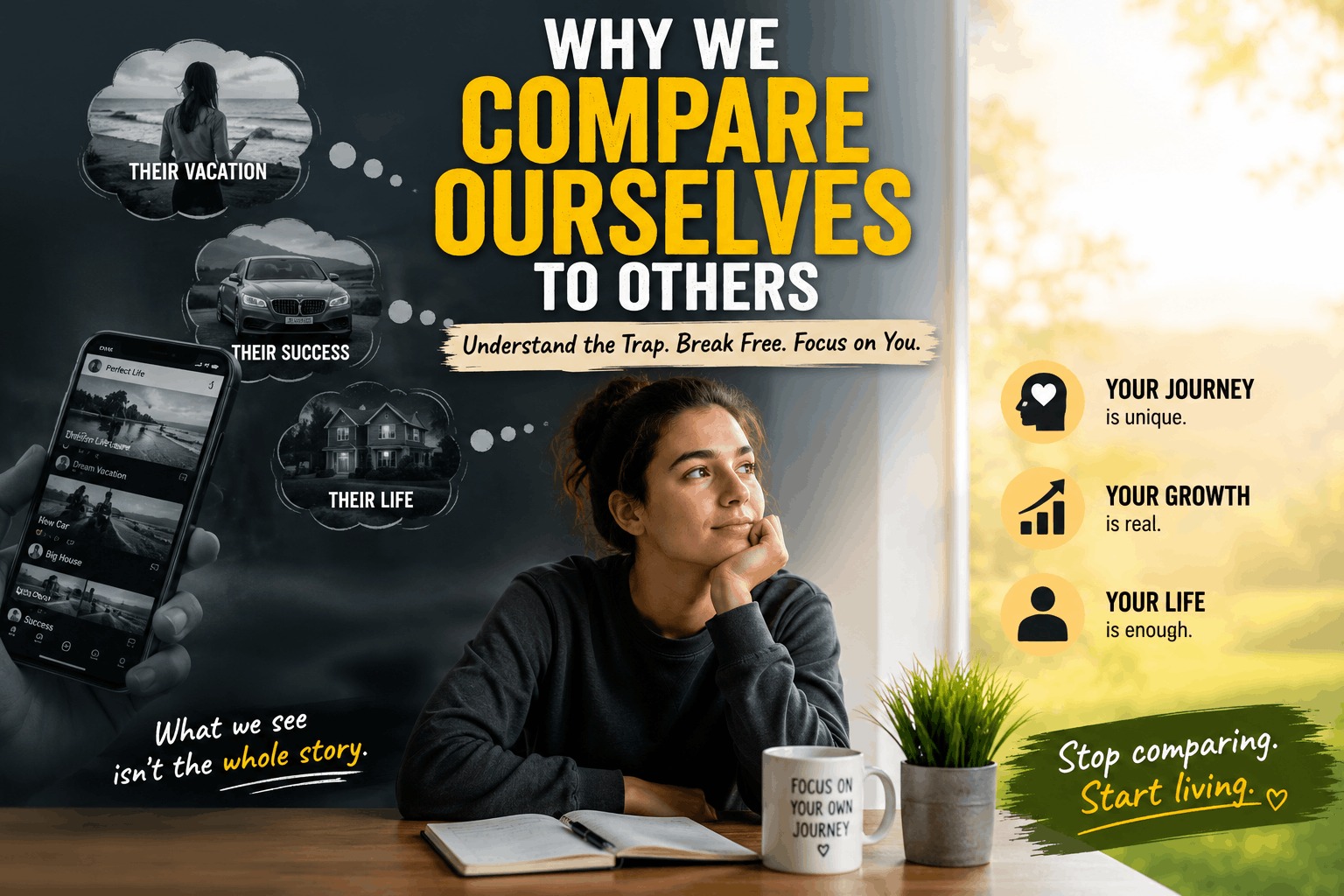
Have you ever opened Instagram for just five minutes…And somehow ended up feeling bad about your own life? Nothing actually happened. Your job didn’t change. Your bank account stayed the same. Your family was still there. But suddenly, it felt like everyone else was doing better than you. If you want to understand why do we compare ourselves to others and how it quietly ruins our happiness, you need to look at how social media tricks our brain.
Social Media Shows the Result, Not the Journey
Let’s be honest. Most of us know social media isn’t completely real. Yet we still compare ourselves. Why? Because our brain reacts to what it sees. Not to what it knows. Imagine seeing someone post, “Just bought my first dream home!” Looks amazing. But what you don’t see is the ten years they spent saving money. The weekends they worked instead of relaxing. The loans. The stress. The failed plans before things finally worked out. You only see the happy photo. Not the full story.
That’s why comparison feels unfair. You’re comparing your ordinary Wednesday with someone else’s biggest milestone. Nobody uploads their sleepless nights. Nobody posts the job rejection that happened last week. Nobody shares the hundred quiet moments when they felt completely lost. Real life is much bigger than one perfect picture.
We Usually Compare Up, Never Sideways
Have you noticed something strange? When people compare themselves, they almost always look at someone who seems ahead. Rarely behind. A college student compares themselves to a millionaire. A beginner compares themselves to an expert. Someone with a small business compares themselves to a huge company. That’s like learning to drive and feeling disappointed because you’re not a Formula One driver. It makes no sense. But our brain does it all the time. Imagine walking into a gym for the first time.
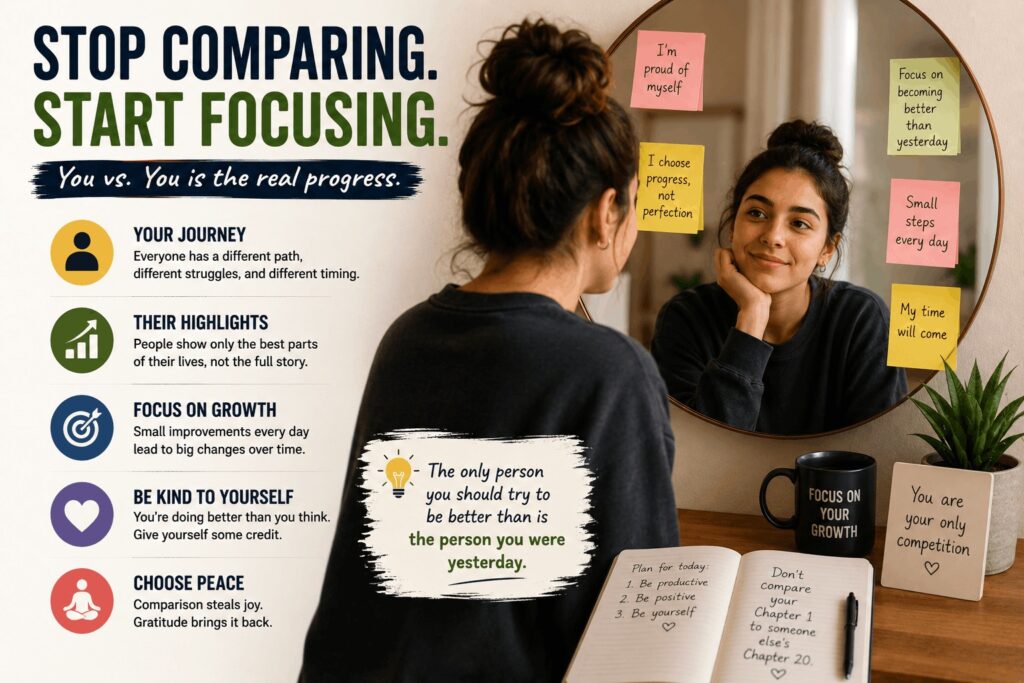
If you spend the whole workout looking at the strongest person there… You’ll probably leave feeling discouraged. But if you compare yourself to the person you were six months ago… You’ll notice you’ve already improved. That’s a much healthier comparison.Understanding this shift in mindset is the biggest secret to mastering why do we compare ourselves to others and how to stop it permanently.” If you are struggling with this, read our complete guide on How to Build Confidence as an Introvert to trust your own journey.”
Childhood Plays a Bigger Role Than We Realize
Think back to school. Many of us heard questions like, “Why can’t you get grades like your cousin?” “Look how well your friend is doing.” “Your brother never behaved like this.” Those comparisons may have seemed small at the time. But hearing them again and again quietly teaches something. It tells us our value depends on being better than someone else. That mindset often follows us into adulthood. Now the classroom has changed. Instead of comparing exam marks…
We compare salaries. Cars. Houses. Followers. Vacations. According to psychological research on childhood behavior published by Harvard Health, these early life comparisons often shape our adult insecurities and affect how we evaluate our self-worth.” The habit stayed the same. Only the subject changed.
The Race Never Actually Ends
Here’s something people rarely talk about.When we look deep into why do we compare ourselves to others, we realize that Comparison has no finish line. Imagine you finally buy the car you’ve always wanted. For a few weeks, you’re excited. Then someone buys a newer model. Now your excitement starts fading. A promotion feels amazing. Until a coworker gets a bigger one. You reach one goal. Then your brain immediately finds another person who’s further ahead. That’s why chasing comparison is exhausting.
You’ll always find someone richer. Smarter. More attractive. Or more successful. There is no final level where comparison suddenly disappears. Unless you decide to stop feeding it. To protect your mind from these toxic triggers, check out our guide on How to Master Your Emotions Before They Master You.”
Most Success Happens When Nobody Is Watching
Think about your favorite athlete. Or your favorite author. Or someone whose career you admire. People usually remember the success. Very few remember the boring years before it. The early mornings. The failed projects. The quiet practice. The thousands of ordinary days. Success usually grows in private. Recognition happens later. Social media skips all those invisible chapters. That’s why it creates unrealistic expectations.
Your Timeline Doesn’t Have to Match Anyone Else’s
One friend gets married at twenty-five. Another at thirty-five. Someone starts a business after college. Someone else finds success after forty. Neither story is wrong. Life isn’t following one universal schedule. Imagine planting an apple tree and a bamboo plant on the same day. The bamboo seems to grow much faster. For a while. But eventually the apple tree produces fruit that the bamboo never will. Different things grow at different speeds. People do too. Your timeline isn’t late. It’s simply yours.
The Better Question to Ask Yourself
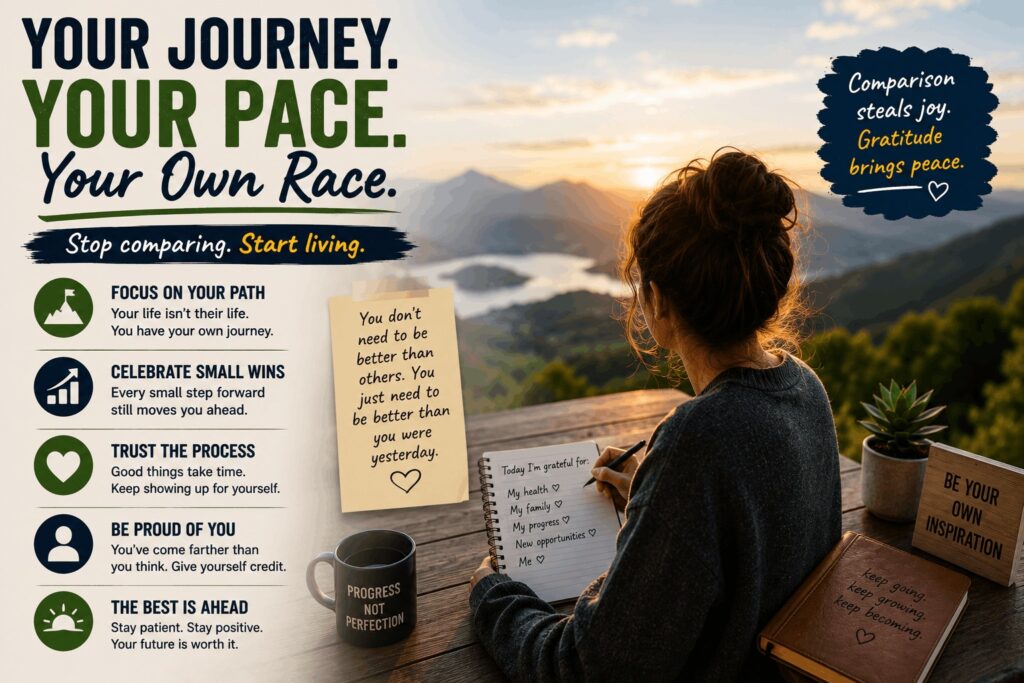
Instead of asking, “Why am I behind?” Try asking, “What have I learned this year that I didn’t know last year?” That question changes everything. Maybe you became better at managing money. Maybe you learned to speak up more. Maybe your relationships became healthier. Maybe you’re finally sleeping better. Not every improvement shows up in a photo. Some of the biggest victories happen quietly.Once you start celebrating these invisible wins, you naturally stop worrying about why do we compare ourselves to others.”
Final Thoughts
Comparison isn’t something you’ll eliminate forever. Even the most confident people compare themselves sometimes. The difference is they don’t stay there. They notice it. Then they bring their attention back to their own life. Back to their own goals. Back to their own progress. Because deep down, they understand something important. Someone else’s success doesn’t reduce your chances of succeeding. There isn’t a limited amount of happiness. Or opportunities. Or success. Life isn’t a competition where only one person wins. The person you need to beat isn’t the stranger on Instagram.
It’s the version of yourself that stopped growing because it was too busy watching everyone else. So the next time comparison quietly sneaks into your mind… Close the app. Take a walk. Call a friend. Read a few pages of a book. Or simply look back at how far you’ve already come. You might realize you’ve been making progress all along. You just forgot to notice it.
Frequently Asked Questions
Why do we compare ourselves to others?
Humans naturally compare themselves to understand where they stand. The problem begins when comparison becomes constant and starts affecting confidence, happiness, or self-worth.
Is comparing yourself always bad?
Not always. Healthy comparison can inspire growth. But comparing yourself to someone’s highlights instead of their full journey often leads to unnecessary stress and self-doubt.
How can I stop comparing myself to others?
Focus more on your own progress than someone else’s success. Limiting social media, practicing gratitude, and setting personal goals can make comparison much less powerful.
Does social media make comparison worse?
Yes. Most people share their best moments online, not their struggles. Seeing only the highlights can create unrealistic expectations and make your own life seem less successful than it really is.