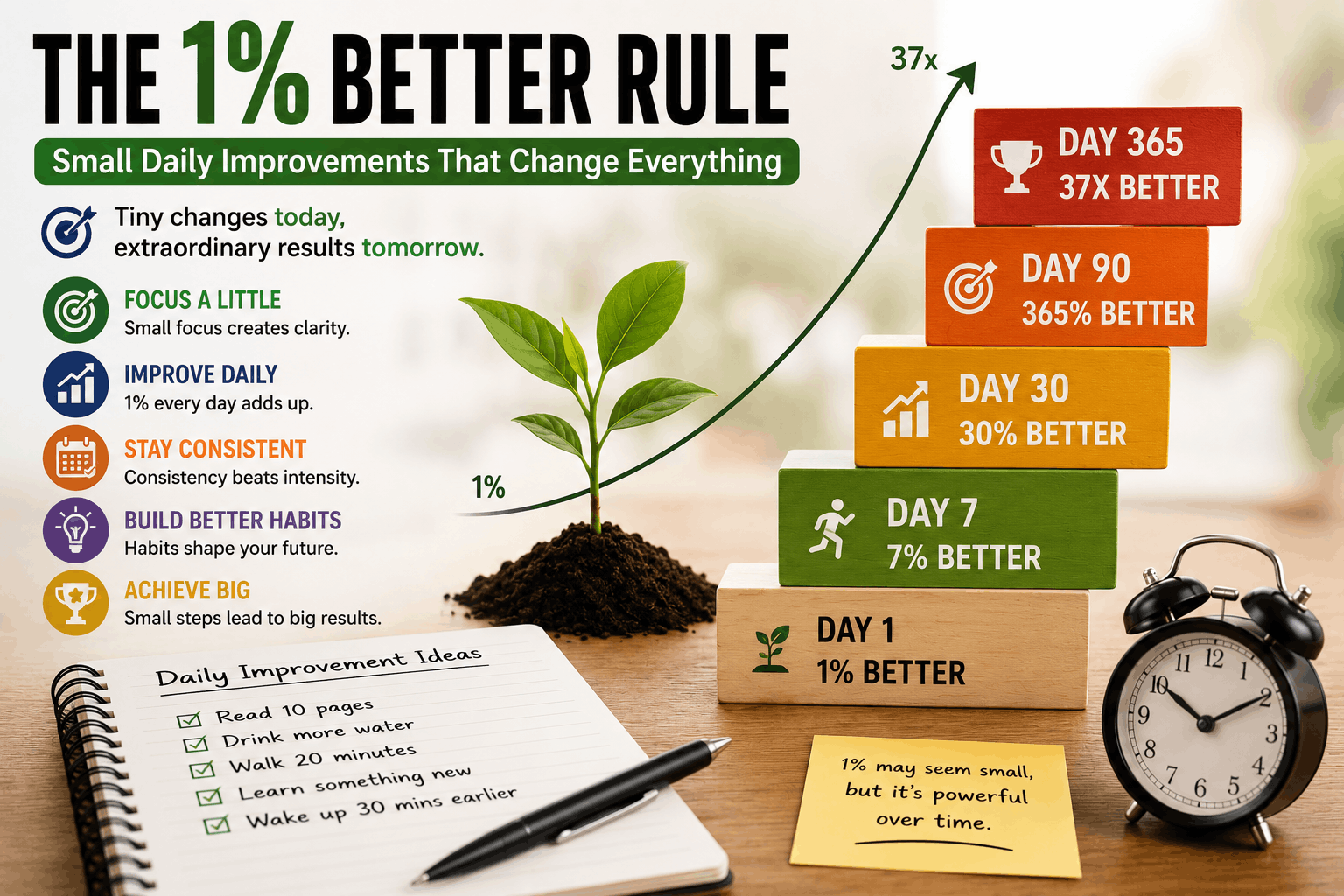
Have you ever promised yourself, “From Monday, everything will change.” You’ll wake up at 5 AM. Exercise every day. Read books. Stop wasting time. Eat healthy. Learn a new skill. For two or three days, everything goes well. Then life happens. One busy day. One late night. One skipped workout. And suddenly the whole plan falls apart. Sound familiar? You’re not lazy. You’re not weak. You’re just trying to change too much, too fast. That’s where the 1% Better Rule changes everything. Instead of trying to become a completely different person overnight, you focus on becoming just a tiny bit better today than you were yesterday. It sounds almost too simple. But that’s exactly why it works.
Small Changes Don’t Feel Powerful…
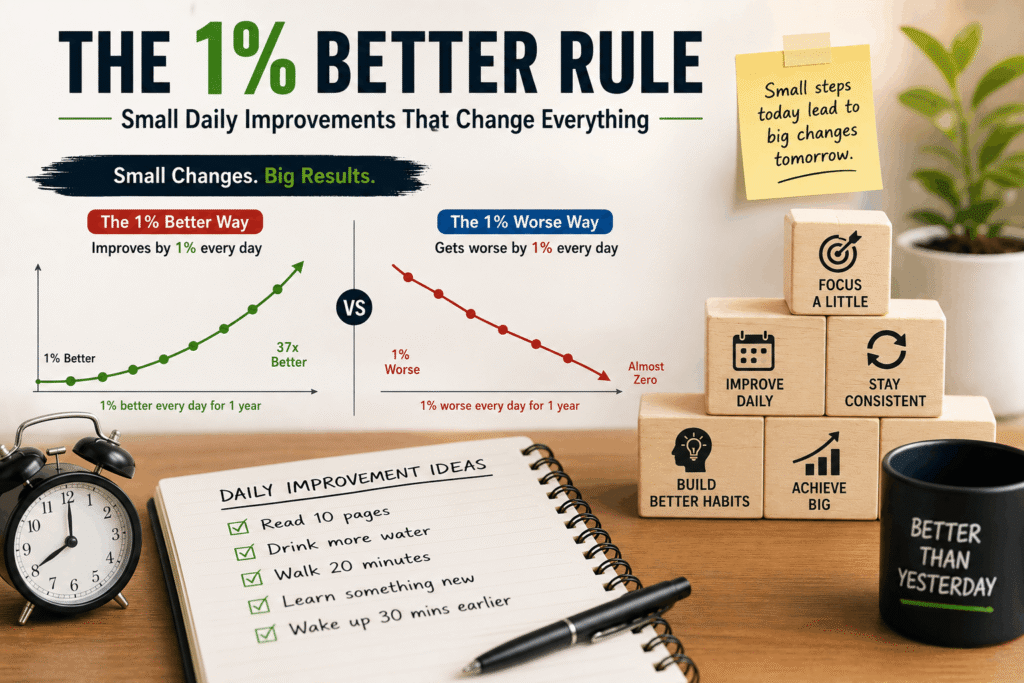
Until They Add Up. Imagine two people. Both start learning English. The first person studies for three hours on Sunday. Then skips the rest of the week. The second person studies for just fifteen minutes every day. Nothing fancy. No pressure. Six months later, who do you think speaks better English? Most people already know the answer. Consistency quietly beats intensity. Almost every single time. As explained in the core concepts of continuous improvement on James Clear’s Official Guide, compounding your habits by just one percent every day creates a massive delta over time. The same thing happens with money. Fitness. Reading. Business. Even relationships. Small actions repeated every day slowly become part of who you are.
The Problem Isn’t Motivation
People spend so much time searching for motivation. They watch videos. Read quotes. Listen to podcasts. For a few hours they feel unstoppable. Then the excitement disappears. Now they’re waiting for motivation again. It’s an exhausting cycle. Think about brushing your teeth. Do you wait to feel motivated? Probably not. You just do it Because it’s a habit. Imagine if improving your life worked the same way. You wouldn’t need motivation every morning. You’d simply follow your routine. That’s why habits usually matter much more than motivation. If you find it hard to start a new routine, you can use The 5-Minute Rule: How to Beat Procrastination and Start Anywhere to trick your brain into taking action without needing motivation.”
A Tiny Change Can Create a Huge Difference
A friend of mine wanted to start reading books. His first plan was ambitious. One book every week. It sounded impressive. It also failed within ten days. Then he tried something different. One page. That’s all. Just one page before sleeping. Some nights he stopped after one page. Other nights he finished twenty. The funny thing? Removing the pressure made reading enjoyable again. A year later, he had finished more books than he had read in the previous five years combined. Not because he forced himself. Because he made starting incredibly easy.
Think About Saving Money
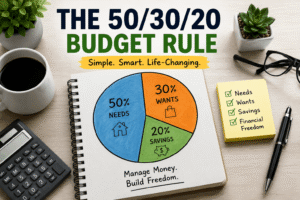
Many people say, “I’ll start saving once my salary increases.” Months pass. Sometimes years. Nothing changes. Someone else starts saving just $2 or $5 whenever they can. It doesn’t look impressive. Friends may even laugh. But after a year, they have something. The other person still has nothing. Big financial goals often begin with surprisingly small decisions. That’s the power of getting just one percent better . If you want a simple framework to manage these small savings, check out The 50/30/20 Budget Rule Explained for Beginners to automate your money easily.”
Why We Ignore Small Progress
Here’s something interesting. Our brain loves quick results. If you lose five kilos in one week, everyone notices. If you lose half a kilo every week, almost nobody notices. But after a few months? The second person often wins. The same thing happens in learning. Writing. Business. And fitness. Small progress feels invisible. Until one day, everyone suddenly asks, “How did you improve so much?” They only see the result. They never see the hundreds of tiny decisions that created it.
Stop Measuring Every Single Day
This is another mistake. People expect visible progress after only three or four days. Imagine planting a seed today. Would you dig it up every morning to check if it’s growing? Of course not. You give it water. You give it sunlight. Then you wait. Personal growth works almost the same way. Not every improvement is visible immediately. Some changes stay hidden for weeks before they become obvious. That’s completely normal.
One Percent Better Doesn’t Mean Perfect
One mistake stops many people from improving. They believe that missing one day means they’ve failed. It doesn’t. Imagine you’re trying to walk 10,000 steps every day. One rainy evening you only manage 3,000. Does that erase all the walking you did last week? Of course not. Life isn’t a school exam where one mistake gives you zero marks. Missing one day isn’t the problem. Giving up completely is. Successful people aren’t perfect. They’re simply good at getting back on track. The next day matters much more than the day you missed.
The Secret Is Making Good Habits Easy
Look around your room for a second. Your environment influences your choices more than you think. If your phone is next to your pillow, you’ll probably check it first thing in the morning. If a book is on your bedside table, you’re more likely to read. If healthy snacks are already in your kitchen, eating better becomes easier. You don’t always need more discipline. Sometimes you just need fewer obstacles. Small changes in your surroundings quietly change your daily behavior.
Why Comparing Yourself to Others Slows You Down
Social media makes improvement look fast. Someone learns a language in six months. Someone starts a business at twenty. Someone loses twenty kilos. Someone buys a new house. You see the result. You don’t see the years of small efforts behind it. That’s why comparison feels unfair. You’re comparing your ordinary Tuesday with someone else’s biggest achievement. Instead of asking, “Why am I behind?” Ask, “Am I slightly better than I was last month?” That’s a much healthier competition. This is why many people are now shifting their mindset and adopting trends like Loud Budgeting to focus on their own goals without worrying about social comparison.” And it’s the only one you can actually control.
The 1% Better Rule Works in Every Part of Life
Want to become healthier? Walk ten more minutes. Want to improve your finances? Save a small amount before spending. Want stronger relationships? Spend ten distraction-free minutes talking to someone you care about. Want to become more confident? Speak up once during a meeting instead of staying silent. None of these actions looks life-changing. That’s exactly the point. Small actions don’t feel difficult. So you’re much more likely to repeat them. And repeated actions slowly become your identity.
Don’t Wait for the Perfect Time
People often say, “I’ll start after my exams.” “Next month.” “After my birthday.” “When work becomes less busy.” The truth is… Life will always stay busy. There will always be another reason to delay. Starting small today is almost always better than planning something huge for tomorrow. You don’t need the perfect Monday. You just need today. Even if today’s improvement feels tiny.
Final Thoughts
Most people underestimate what small actions can do. Not because they’re impossible. Because they’re easy to ignore. Reading five pages. Saving $10. Walking for fifteen minutes. Sleeping thirty minutes earlier. Learning one new word. None of these feels exciting on its own. But repeat them for months. Then look back. You’ll probably be surprised by how far you’ve come. The biggest transformations rarely happen in one dramatic moment. They happen quietly. One ordinary day at a time. One small decision at a time. One percent better. Every single day.
Frequently Asked Questions
What is the 1% Better Rule?
The 1% Better Rule is the idea of making very small improvements every day instead of trying to change everything at once. Over time, these small actions can lead to big results.
Does the 1% Better Rule really work?
Yes. Small habits are easier to maintain than big lifestyle changes. Consistency over weeks and months often creates lasting improvement.
Can I use the 1% Better Rule for studying?
Absolutely. Even studying for 15–20 minutes every day can be more effective than long study sessions done only once in a while.
How long does it take to see results?
Some changes may be noticeable within a few weeks, while others can take months. The key is staying consistent instead of expecting instant results.
If this article inspired you, don’t try to change your whole life tonight. Just choose one tiny improvement before you go to bed. Your future self won’t remember one perfect day. But it will definitely remember hundreds of small ones.
Related Articles:
The Psychology of Money: 7 Mindset Shifts That Build Wealth
The 5-Minute Rule: How to Beat Procrastination and Start Anywhere
Emergency Fund 101: How Much Money Should You Really Save?
Loud Budgeting: Why Saying “No” to Spending Is the New Status Symbol