
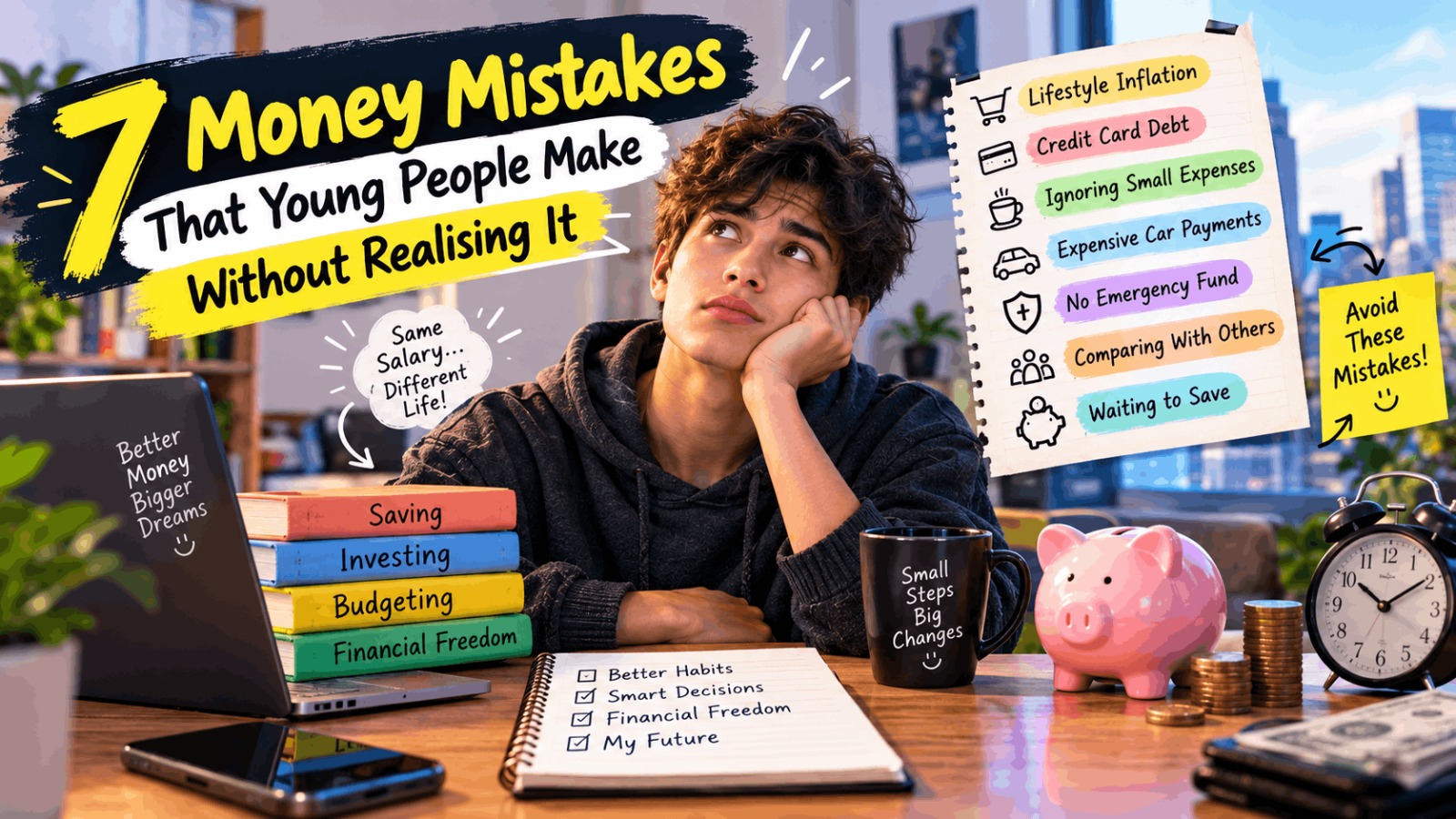
You get your first decent paycheck. For the first time, you feel like you can finally breathe. Maybe you are making $40,000 a year. Maybe $50,000. Maybe even more. You start thinking: “I can afford this.” So you upgrade your phone. You order food more often. You move into a nicer apartment. You get a car payment. You subscribe to Netflix, Spotify, Amazon, a gym, a few apps, and maybe three services you forgot you were paying for. Nothing feels wrong. You are still paying your bills. Your bank account is not empty. But somehow, at the end of the month, you look at your balance and wonder: “Where did all my money go?”
This is where many young adults get stuck. The problem is not always a low salary. Sometimes, it is a few small money mistakes repeated every month. And the scary part? You may not even realize you are making them. A $15 subscription does not feel dangerous. A $40 dinner does not feel dangerous. A $200 monthly car upgrade does not feel dangerous. But put all of them together for a year, and suddenly you are looking at thousands of dollars.
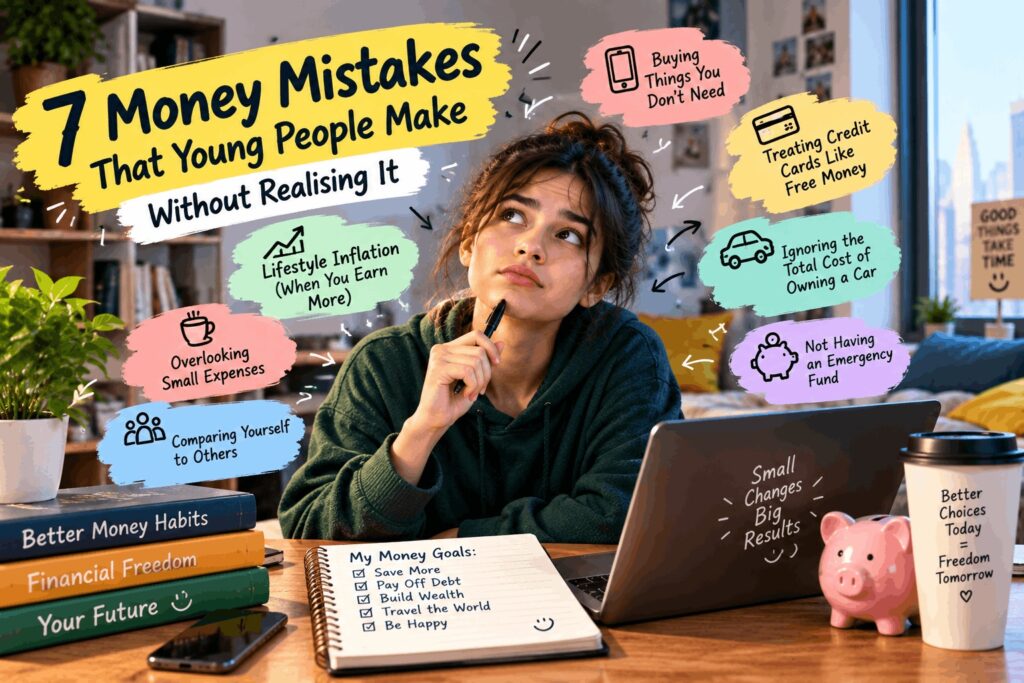
The good news is that these mistakes are usually fixable. You do not need to become extremely cheap. You do not need to stop enjoying life. You simply need to notice where your money is quietly disappearing. So let’s talk about 7 money mistakes that young people make without realizing it.
1. Increasing Your Lifestyle Every Time Your Income Increases
This one is incredibly common. You get a raise. Maybe you were making $3,000 a month after taxes. Then your income goes up. Now you have $3,400. It feels like you have an extra $400 to spend. So you start spending it. A slightly better apartment. More restaurant meals. A newer phone. More Uber rides. Better clothes. Weekend trips. Then another raise comes. And the same thing happens again. This is called lifestyle inflation. Your income increases. But your spending increases right along with it. And sometimes, spending increases even faster. Imagine a guy named Jake. Jake is 24.
He gets his first full-time job and earns enough to live comfortably. At first, he shares an apartment with a roommate. His rent is $900. He cooks most of his meals. He drives an older car that is already paid off. He manages to save around $500 every month. A year later, Jake gets a raise. His salary increases by $8,000. He is excited. And honestly, he deserves to enjoy some of that extra money. But instead of keeping most of his old lifestyle, he upgrades almost everything. His new apartment costs $1,500. He finances a newer car. He starts eating out several times a week. His monthly subscriptions increase.
His weekend spending increases too. After all these changes, that $8,000 raise doesn’t feel like a raise anymore. His paycheck is bigger. But his savings account barely moves. This is the trap. More income does not automatically create more financial freedom. If your lifestyle grows every time your paycheck grows, you can earn a lot and still feel broke. You don’t have to live like a student forever. That’s not the point. Instead, try something simple.
When your income increases, allow yourself to enjoy part of the increase. But don’t let every extra dollar become a new monthly bill. For example, if you get an extra $400 per month, maybe you use $100 for something fun and direct the remaining $300 toward savings, investing, or debt. That way, your lifestyle improves. But your financial situation improves too.
2. Treating Your Credit Card Like Free Money
Credit cards can be useful. They can help build credit. They can make purchases convenient. They can also become a financial headache very quickly. The problem starts when you stop thinking of a credit card as borrowed money. Instead, you start thinking: “I have $5,000 available.” But that is not your money. It is your credit limit. There is a huge difference. Let’s say you have a credit card with a $5,000 limit. You buy a $900 laptop. Then you spend $300 on clothes. Another $250 on restaurants. $150 on random online purchases. Suddenly, you have spent $1,600. And because the card still has plenty of available credit, it doesn’t feel serious.
But the bill arrives. Now you have to pay that $1,600 back. If you cannot pay the balance in full, interest can make the purchase much more expensive. This is how a small balance can turn into a long-term problem. Consider Sarah. She earns around $3,200 per month after taxes. She uses her credit card for almost everything. Food. Shopping. Gas. Entertainment. She tells herself she will pay it off after her next paycheck. But then something happens. Her car needs a repair. Then she has a birthday to attend. Then she spends more than expected during a weekend trip. The credit card balance keeps growing. Eventually, she is paying the minimum just to keep the account current.
Now part of every future paycheck is already committed to old spending. That’s when a credit card stops being convenient. It starts controlling your cash flow. One simple rule can prevent a lot of this: If you cannot comfortably pay for something with your available monthly income, be careful about putting it on a credit card. Using a credit card is not automatically bad. The issue is carrying expensive debt because you spent money you did not really have. Before buying something, ask yourself: “If this purchase appeared as cash coming out of my bank account today, would I still buy it?” That question can stop a surprising number of impulse purchases.
3. Ignoring Small Expenses Because They “Don’t Matter”
This mistake is sneaky. Nobody goes broke because of one $6 coffee. Nobody destroys their finances because of one $12 lunch. The problem is repetition. A small expense becomes a big expense when you make it every day. Let’s say you buy a $6 coffee on your way to work. Five days a week. That’s about $30 a week. Around $120 a month. And roughly $1,440 a year. Now add a few other things. A couple of food deliveries. Some snacks. A streaming service. A premium app. A few impulse purchases from Amazon. Suddenly, you may have hundreds of dollars leaving your account every month without making one big purchase.
And because none of these purchases feels serious, you don’t notice them. This is why checking your bank statements can be so useful. Not because you need to judge every dollar. Just because you need to see what is actually happening. Take Alex. Alex thought he was pretty good with money. He didn’t buy expensive cars. He didn’t have huge credit card debt. He didn’t go on luxury vacations. But he kept saying: “I don’t understand why I can’t save more.” One Sunday, he looked through his bank transactions. He found food delivery charges. Coffee. Gaming purchases. Streaming subscriptions. Online shopping. Uber rides. Small convenience purchases.
None of them looked crazy. Together, they were costing him more than $500 a month. That’s more than $6,000 a year. He didn’t need to eliminate everything. He simply changed a few habits. He cooked more often. Canceled subscriptions he barely used. Reduced food delivery. Started making coffee at home on some days. The goal wasn’t to become extremely cheap. It was to make his spending more intentional. That’s the important part. Small expenses matter when they become automatic. You don’t have to remove every little pleasure from your life.
Just make sure you know what your little pleasures are costing you.
4. Buying a Car Based on the Monthly Payment
This is a big one, especially for young adults. You walk into a dealership. The salesperson asks: “What monthly payment are you comfortable with?” And suddenly the conversation becomes about monthly payments. $350 sounds manageable. $450? Maybe. $550? Well, if you really want the car… This is where things can get messy. Because the monthly payment is only one part of owning a car. You also have:
- Car insurance
- Gas
- Maintenance
- Repairs
- Registration
- Parking
- Tires
- Unexpected costs
Let’s say Daniel finds a car with a $400 monthly payment. He thinks: “That’s only $400.” But his real monthly cost looks more like this: $400 car payment. $180 insurance. $150 gas. $75 maintenance and repairs averaged over time. $50 parking. Now the car is costing around $855 a month. That’s over $10,000 a year. And Daniel may not even realize it because the $400 payment is the number he notices most. This is why buying a car should not be based only on whether you can make the monthly payment. Look at the total cost of ownership.
A car that costs $350 per month but requires expensive insurance and repairs may not be cheaper than a car with a higher payment but lower running costs. And there’s another issue. A large car payment can quietly reduce your choices. Imagine earning $3,500 per month after taxes. If your car costs $850 every month, that’s almost one-quarter of your take-home income. That money cannot easily be used for an emergency fund. Or investing. Or a future home. Or travel. Or starting a business. It is already committed. Before buying a car, look at the entire monthly cost. Not just the number written on the financing agreement.
5. Waiting to Save “When You Earn More”
This sounds logical. “I’ll start saving when I get a better job.” “I’ll save after my next raise.” “I’ll save once I finish paying this off.” “I don’t make enough right now.” The problem? There is always a reason to wait. You get a raise. Then rent increases. You get a better job. Then your lifestyle increases. You pay off one expense. Another one appears. This is why learning to save with a smaller income can be powerful. You don’t need to save huge amounts at first. The habit matters. Imagine two people who are both 23.
Person A earns $45,000 and saves $150 every month. Person B earns $60,000 but saves nothing because they believe they will start later. A few years pass. Person A has built an emergency fund. They have developed the habit of saving. They have learned how to control spending. Person B earns more but still feels like there is never enough. The exact numbers will be different for everyone. But the lesson is simple:
Saving is not only about how much you earn. It’s also about what you do when the money arrives. Even starting with $25 or $50 per paycheck can change how you think about money.You start treating saving as a normal part of your budget instead of something that happens only if money is left over.
And that’s important because money is rarely “left over” by accident. If you wait until the end of the month to save whatever remains, you may discover that nothing remains. Bills happen. Shopping happens. Life happens. A better approach is to make saving part of your plan from the beginning. Even if the amount is small.
6. Having No Emergency Fund
This is one of those things you don’t appreciate until you need it. Everything can be going perfectly. Your job is fine. Your rent is paid. Your car works. Your bank account looks okay. Then suddenly… Your car breaks down. Your laptop stops working. Your apartment needs an unexpected repair. You have to travel for a family emergency. Your work hours get reduced. Life doesn’t always give you a warning. Without emergency savings, an unexpected expense can immediately become credit card debt. Let’s go back to Jason. Jason earns $50,000 a year. He pays his bills on time. He has a decent job. But he has only $200 in savings.
One month, his car needs a $900 repair. Jason doesn’t have the money. So he puts the repair on a credit card. Two months later, another unexpected expense appears. Now the balance is growing. Jason’s salary didn’t suddenly become too low. His problem was that he had no financial cushion. An emergency fund is basically a buffer between you and life’s surprises. You don’t necessarily need thousands of dollars sitting in your account on day one. Start with a smaller target. Maybe $500. Then $1,000.
Then work toward a larger emergency fund that fits your situation. The right amount depends on your income, job stability, expenses, and personal circumstances. But even a small cash buffer can make an unexpected bill less stressful. And there’s another benefit. An emergency fund can stop you from making bad financial decisions under pressure. When you have no savings, a $700 problem feels like a disaster. When you have a financial cushion, it may simply feel like an annoying expense. That’s a very different experience.
7. Comparing Your Financial Life to Everyone Else
This might be the most emotional money mistake on the list. You open Instagram. Someone is traveling. You open TikTok. Someone bought a new car. You see a friend moving into a beautiful apartment. Someone posts a picture from an expensive restaurant. Someone else talks about their new designer clothes. And suddenly your life feels smaller. You start thinking: “Am I falling behind?” So you spend money to catch up. This is where social media can make money decisions complicated. You usually see the purchase. You don’t see the financial situation behind it. That person driving a $50,000 car might have a high income.
Or they might have a huge car payment. Or they might have family support. Or they might have significant debt. You simply don’t know.The same thing happens with vacations. Someone can post a picture from a luxury hotel while their credit card balance is growing. You see the beach. You don’t see the bill. This doesn’t mean you should never enjoy nice things. Of course you should spend money on things that matter to you. The problem is spending money because you are trying to look like you are doing well.
Consider Emily. Emily is 26. She notices that several of her friends have nicer apartments. She starts feeling embarrassed about her small place. So she moves. Her new rent is $600 more per month. At first, she loves it. The apartment looks amazing. She posts pictures. But after a few months, she realizes that extra $600 has made everything tighter. She has less money for savings. Less money for travel. Less room for emergencies. And eventually, the excitement of the apartment becomes normal. That is an important thing about lifestyle upgrades. You get used to them. The new apartment becomes your normal. The new car becomes your normal.
The expensive dinners become your normal. Then you need another upgrade to feel the same excitement. Instead of asking: “Can I afford what other people have?” Ask: “Does this actually fit the life I want?” That’s a much better question.
The Bigger Problem: These Mistakes Usually Work Together
Here’s what makes these money mistakes dangerous. They don’t always happen separately. They can create a chain reaction. Imagine someone gets a $50,000 salary. They upgrade their apartment. Then they buy a car. Then they use a credit card for furniture. They eat out because they are busy. They subscribe to several services. They don’t build an emergency fund. Then an unexpected $1,000 expense arrives. Now they use the credit card again. A few months later, they get a raise. Instead of using the extra money to reduce debt, they upgrade their lifestyle again. Nothing looks completely crazy. But everything together creates pressure.
This is why personal finance is not just about finding one magical investment. It starts with basic money decisions. How much comes in? How much goes out? What bills are fixed? What spending is flexible? How much debt are you carrying? Do you have emergency savings? Are your financial goals getting money every month? These questions are simple. But they can completely change the way you see your money.
A Simple Money Check You Can Do This Weekend
You don’t need a complicated spreadsheet. You don’t need a finance degree. Open your bank account. Look at the last 30 days. Then write down: Money coming in: Your after-tax income. Fixed expenses: Rent, car payment, insurance, phone, subscriptions, and other regular bills. Flexible expenses: Food, entertainment, shopping, transportation, and other spending that changes. Debt payments: Credit cards, student loans, personal loans, or other debt. Savings:
Emergency fund, retirement, investments, or other savings. Now look at the numbers. Ask yourself: Where am I spending more than I expected? That question alone can be eye-opening. Maybe food delivery is higher than you thought. Maybe subscriptions are quietly eating $80 a month. Maybe your car costs more than you realized. Maybe you are saving less than you assumed. Don’t judge yourself. Just look at the numbers. You can’t change a problem you haven’t noticed yet.
What If You Already Made These Mistakes?
Don’t panic. Seriously. Making a bad money decision in your early 20s doesn’t mean you have ruined your future. Most people learn about money through experience. You might have bought a car that was too expensive. You might have carried a credit card balance. You might have spent too much on things you didn’t really need. You might have ignored your savings for a few years. That doesn’t mean you need to fix everything overnight. Start with one problem. If you have expensive credit card debt, focus on that.
If you have no emergency savings, start building a small cash buffer. If lifestyle inflation is eating your raises, review your monthly expenses. If your car is too expensive, understand the total cost and think about your options. Small changes can create room. And once you create room, you have more choices. That’s really what good money management is about. Not being perfect. Having choices.
Frequently Asked Questions
What is the biggest money mistake young people make?
There isn’t one mistake that applies to everyone. But lifestyle inflation, credit card debt, ignoring small recurring expenses, and failing to build emergency savings are common problems.The important thing is to look at your own spending instead of copying someone else’s financial strategy.
How much money should a young person save every month?
There is no single number that works for everyone. Your income, rent, debt, family situation, and financial goals all matter. If you are starting from zero, even a small regular amount can help you build the habit. As your income grows, you can increase your savings rate.
Is using a credit card bad?
No. Credit cards can be useful when used responsibly. The problem is carrying a balance you cannot comfortably repay, especially when high interest charges start accumulating. Using a card is very different from relying on debt to fund your lifestyle.
Should I stop buying expensive things?
Not necessarily. Money is meant to be used. The question is whether the purchase fits your priorities and whether you can afford it without damaging your finances. You can enjoy restaurants, travel, technology, clothes, hobbies, and other things. Just make sure your spending reflects your actual priorities.
How much should I have in an emergency fund?
The right amount depends on your situation. Someone with a stable job and low expenses may have different needs from someone with variable income and high monthly bills. A practical starting point is to build a small emergency buffer first, then gradually work toward several months of essential expenses.
Why do I earn more but still feel broke?
This is often connected to lifestyle inflation.
When income increases, people sometimes increase spending without realizing it. A bigger paycheck can disappear surprisingly fast when rent, car costs, eating out, subscriptions, and shopping all increase at the same time.
How can I start managing money better?
Start by tracking where your money actually goes. Then separate essential expenses from optional spending. Build some emergency savings. Be careful with high-interest debt. And give your future goals a place in your monthly budget. You don’t need a perfect system. You need a system you can actually follow.
Final Thought
Your 20s and early 30s can be an exciting time with money. You may get your first real salary. You may move out. Buy a car. Travel. Start investing. Build a career. Maybe even start a business. There is nothing wrong with enjoying these years. But there is one thing worth remembering. The money decisions that feel small today can become very important when you repeat them for years. A $20 purchase isn’t going to destroy your finances. Neither is one dinner. Neither is one vacation. The bigger issue is when spending becomes automatic and your financial goals become an afterthought. You don’t need to become obsessed with every dollar.
You just need to know where your money is going. Because two people can earn the exact same salary and end up living completely different financial lives. One may have expensive monthly payments, little savings, and constant financial stress. The other may have similar income but lower fixed costs, some savings, manageable debt, and more breathing room. The difference isn’t always income. Sometimes, it’s the decisions made between one paycheck and the next. And the earlier you notice those decisions, the easier it becomes to change them.