

Have you ever looked at someone your age and thought, “I’m already behind”? Maybe they’re investing, bought their first home, or already have a growing savings account. Meanwhile, you’re just trying to get your finances under control. If that’s how you feel, here’s something important: starting late doesn’t mean finishing last. It only means your journey begins from a different place.
Many people spend years believing they’ve missed their chance. They think, “If I didn’t start investing at 20, there’s no point now.” That’s simply not true. Wealth isn’t built by one perfect decision. It’s built by hundreds of small decisions repeated over time. Learning how to build wealth if you start late is completely possible, and the best day to start making those smart decisions is today.
Why So Many People Start Late in Life
Nobody hands us a money manual when we become adults. Most schools teach algebra, history, and science, but almost nobody teaches budgeting, investing, taxes, or building long-term wealth. So, people figure it out later.
Some spend years paying off student debt, others are busy raising children, and some simply don’t earn enough at the beginning of their careers. Life happens, and starting late is much more common than people think. The difference is that some people stay stuck because they feel guilty, while others decide today is better than another year of waiting.
Stop Looking Back and Start Acting
Imagine planting a tree. You wanted to plant it ten years ago but you didn’t. Should you refuse to plant it today just because you missed the perfect time? Of course not. Ten years from now, you’ll either have a growing tree or another excuse.
Money works in a surprisingly similar way. Regret doesn’t increase your savings; action does. The sooner you stop thinking about lost time, the sooner your financial future starts changing.
5 Practical Habits to Build Wealth Starting Late
To catch up effectively, you need to shift your focus from shortcuts to solid financial habits. Here is how you can speed up your progress without taking unnecessary risks.
1. Forget About Getting Rich Quickly
One mistake traps many late starters: they feel behind, so they start chasing shortcuts, risky investments, “guaranteed” returns, or get-rich-quick schemes. Most of those promises end the same way—with less money than you had before. Real wealth usually grows quietly, slowly, and consistently. It isn’t exciting, but that’s exactly why it works.
2. Save First, Upgrade Your Lifestyle Later
Imagine getting a raise. Many people celebrate by upgrading their lifestyle—a newer phone, a better car, or a bigger apartment. There’s nothing wrong with enjoying your success, but if every raise immediately becomes higher spending, your income grows while your wealth stays the same.
Instead, try something different. Every time your income increases, increase your savings and investments first. Then, decide how much you truly want to spend. This one habit can completely change your financial future.
📚 RECOMMENDED READING FOR YOU:
- 📌 How to Stop Seeking Approval and Start Living for Yourself — Read our deep dive on how to build real self-confidence and stop letting others control your life choices.
3. Focus on Habits, Not Just Income
We’ve all heard stories about people earning six figures but living paycheck to paycheck. We’ve also seen people with average incomes quietly build impressive wealth.
What’s the difference? Usually, it’s their habits. Someone earning an average salary who consistently saves, invests, and avoids unnecessary debt often ends up in a much stronger position than someone earning twice as much but spending everything. Money isn’t only about how much comes in; it’s about how much stays.
4. Let Small Investments Grow Over Time
Many people delay investing because they think they need thousands of dollars. You don’t. Imagine investing a small amount every month. It doesn’t feel impressive at first, and some months you’ll barely notice it. But year after year, those small contributions continue growing.
Eventually, the returns begin earning their own returns—this is the power of compound growth. According to financial guides on compound interest, it rewards consistency much more than perfection. The hardest part isn’t finding the perfect investment; it’s simply getting started.
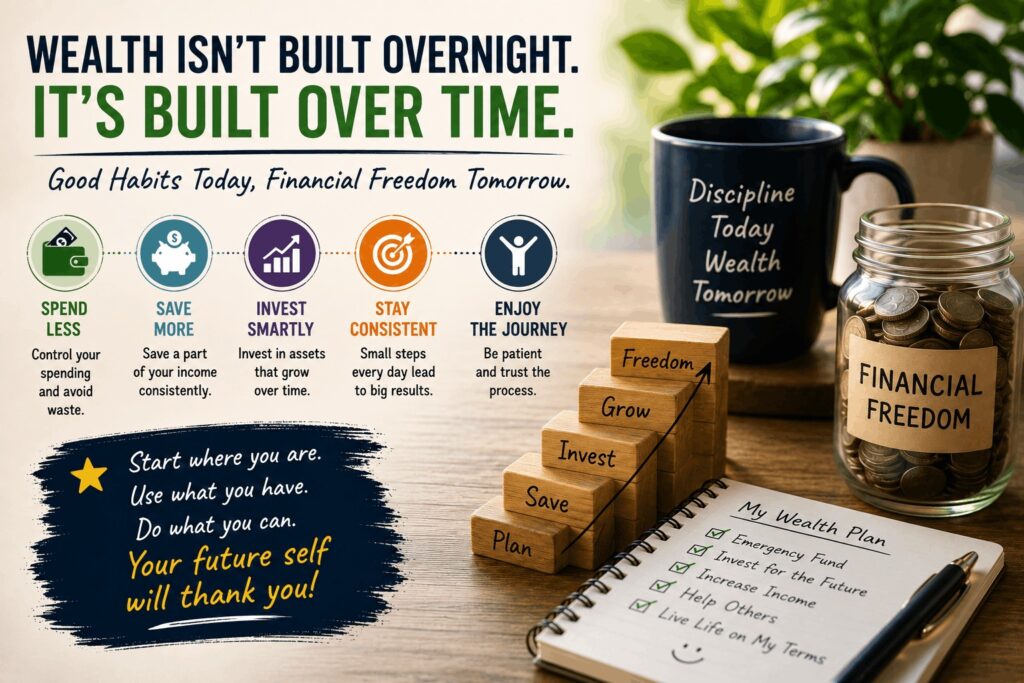
5. Stop Comparing Your Financial Timeline
One friend bought a house at twenty-six. Another started investing at thirty-eight. Someone else became debt-free at forty-five. Whose timeline is correct? All of them.
Life is not a race with one finish line. Everyone starts with different opportunities, different salaries, and different responsibilities. The only comparison that really matters is this: Are you making smarter money decisions than you were last year? If the answer is yes, you’re already moving in the right direction.
Advanced Strategies to Speed Up Wealth Building
If you are starting later in life, simply saving might not be enough. You need to play active offense and defense with your money.
Build Skills That Increase Your Income
Saving money is important, but there’s another side of the equation: earning more. Imagine two people who save the same percentage of their income. One earns $45,000 a year, and the other earns $90,000. Obviously, the second person can invest much more.
That’s why your biggest investment should often be in yourself. Learn a valuable skill, improve your communication, take an online course, or become better at your job. A higher income doesn’t automatically create wealth, but it gives you more opportunities to build it.
Don’t Let Debt Control Your Future
Debt isn’t always the enemy; the real danger is unnecessary lifestyle debt. Think about buying a brand-new phone you don’t really need just because the monthly payment looks small. Then comes a new laptop, a vacation, or a bigger TV. One by one, those small payments start filling your monthly budget. Before long, a large part of your paycheck is already spoken for.
Now imagine the opposite: no unnecessary payments, more money available to save, and more freedom to invest. That is what true wealth building feels like.
Make Your Money Work While You Sleep
Most people only think about working for money. Wealthy people also think about making money work for them. Imagine planting a fruit tree. At first, it gives you almost nothing. But after a few years, it keeps producing fruit without asking you to plant it again. Investments work the same way. Over time, your money can begin generating returns on its own. That’s why patience is often your most valuable financial asset.
Beware of Lifestyle Inflation
Getting a raise or a promotion feels amazing. The problem starts when every raise immediately turns into higher spending—a nicer apartment, a luxury car, more expensive restaurants, or premium subscriptions.
Nothing seems too expensive anymore until one day you realize you’re earning more than ever but somehow saving less. This is lifestyle inflation, the silent wealth killer. Instead of upgrading everything, upgrade your future first. Increase your investments before increasing your lifestyle.
Choose Your Circle Wisely
Have you noticed that if everyone around you spends impulsively, saving starts feeling strange? But if your closest friends talk about investing, budgeting, or financial goals, those habits slowly become your normal. You don’t need rich friends; you need friends who make responsible decisions. The people around you quietly shape your financial mindset more than you realize.

Wealth Is Built During Ordinary Days
Many people imagine wealth begins with one huge opportunity—a successful business, winning the lottery, or a lucky investment. Sometimes that happens, but most of the time, it doesn’t.
Real wealth is usually built during completely ordinary days. It is built by:
- Packing lunch instead of ordering delivery.
- Automated investing before you go shopping.
- Paying your bills on time to avoid fees.
- Reading one book about personal finance.
- Avoiding emotional impulse purchases.
None of these decisions look life-changing on their own, but together, they quietly build long-term financial freedom. The best time to start is always now. You can’t control yesterday, but you completely control today’s decision.
Final Thoughts: Your Best Financial Chapter is Next
Building wealth isn’t reserved for people who started investing at eighteen. It’s for people who stay consistent, save before they spend, keep learning, and make patient decisions instead of emotional ones.
Starting late doesn’t mean you’ve failed; it simply means your best financial chapter hasn’t been written yet. Forget the timeline and stop comparing yourself to others. Focus on building habits that your future self will thank you for.
Frequently Asked Questions (FAQs)
Is it too late to build wealth after 30 or 40?
Not at all. Many financially successful people begin investing and building wealth in their 30s, 40s, or even later. Consistency and your savings rate matter much more than having a perfect starting age.
What is the fastest way to build wealth starting late?
There is no safe shortcut. The most reliable way to speed up the process is to build high-value skills to increase your income, aggressively control lifestyle inflation, and invest consistently.
Should I pay off my debt before I start investing?
It depends on the interest rate. High-interest debt (like credit card debt) should be paid off first. Low-interest debt (like a mortgage) can often be managed alongside long-term investing.
How much of my income should I save every month?
A common financial recommendation is to save and invest at least 20% of your income. If that is not realistic right now, start with any small amount you can consistently maintain and increase it slowly.
Can someone with an average salary actually become wealthy?
Absolutely. Most everyday wealth is built through consistent saving, investing, and smart spending habits—not because of extraordinary starting salaries.